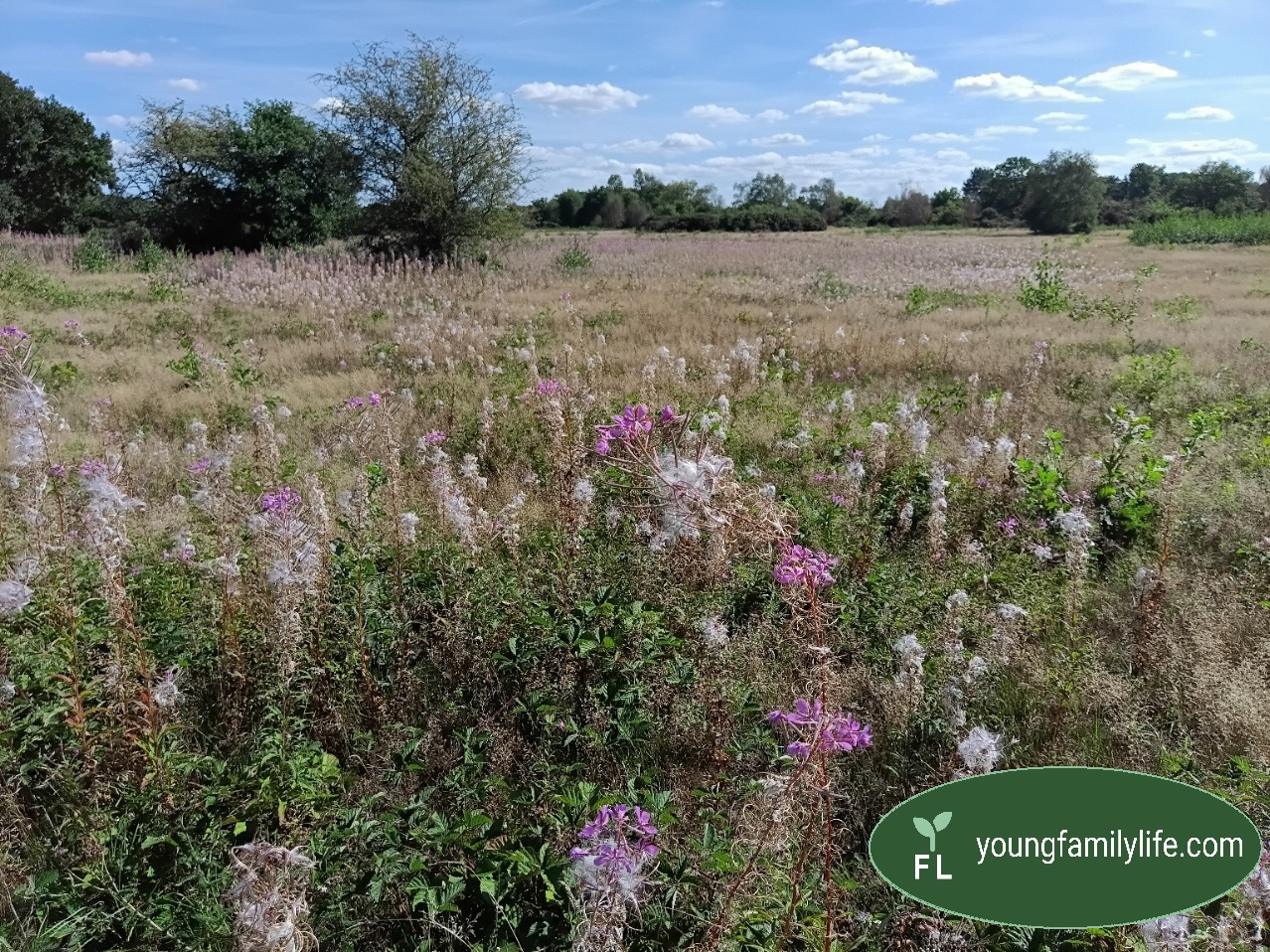
September on the Common
When I wrote the last entry, the grass across the Common had browned and stalled, and I said that what looked like a crisis was really dry-spell dormancy: the plants stop growing, die back at the surface and wait. September 2026 has been the test of that. The rain that arrived towards the end of August, and on and off through part of September, has done what I hoped it would. In areas the green is coming back, and the Waveney has a little more flow to it than it had in August.
It has also been a lovely month to be out there. Still warm, plenty of sun, and good for walking, watching wildlife and simply spending time on the Common. If August was the month I worried about the look of the place, September has been the one where I mostly just enjoyed it.
That is my impression from walking it, and I hold it loosely, because the official figures are a little more mixed. The Met Office puts East Anglia's August rainfall at around 70% of average, and the Environment Agency says most of it fell between 26 and 29 August. Its report for East Anglia also ranks March to August as the fourth driest such period since records began in 1871. The end of August into early September was the wettest week in England since early February, and river flows rose at just over half the sites the Agency reports on in the week to 10 September. But for England as a whole, September's rain to the 24th stood at 58% of average, the eastern side of England got only 1 to 3 mm in the week to the 24th, and river flows were falling again at most sites. Formal water abstraction restrictions remain in parts of East Anglia until 31 October.
So the Common can look and feel greener than it did a month ago while the region's water picture is still stretched. Those are different measures of different things, and it is another reason I was careful with the word "drought" last time. Whether the extra flow I have noticed in the river holds through October I can't say.
A New Essay: When Does a Migrant Become "Old Enough"?
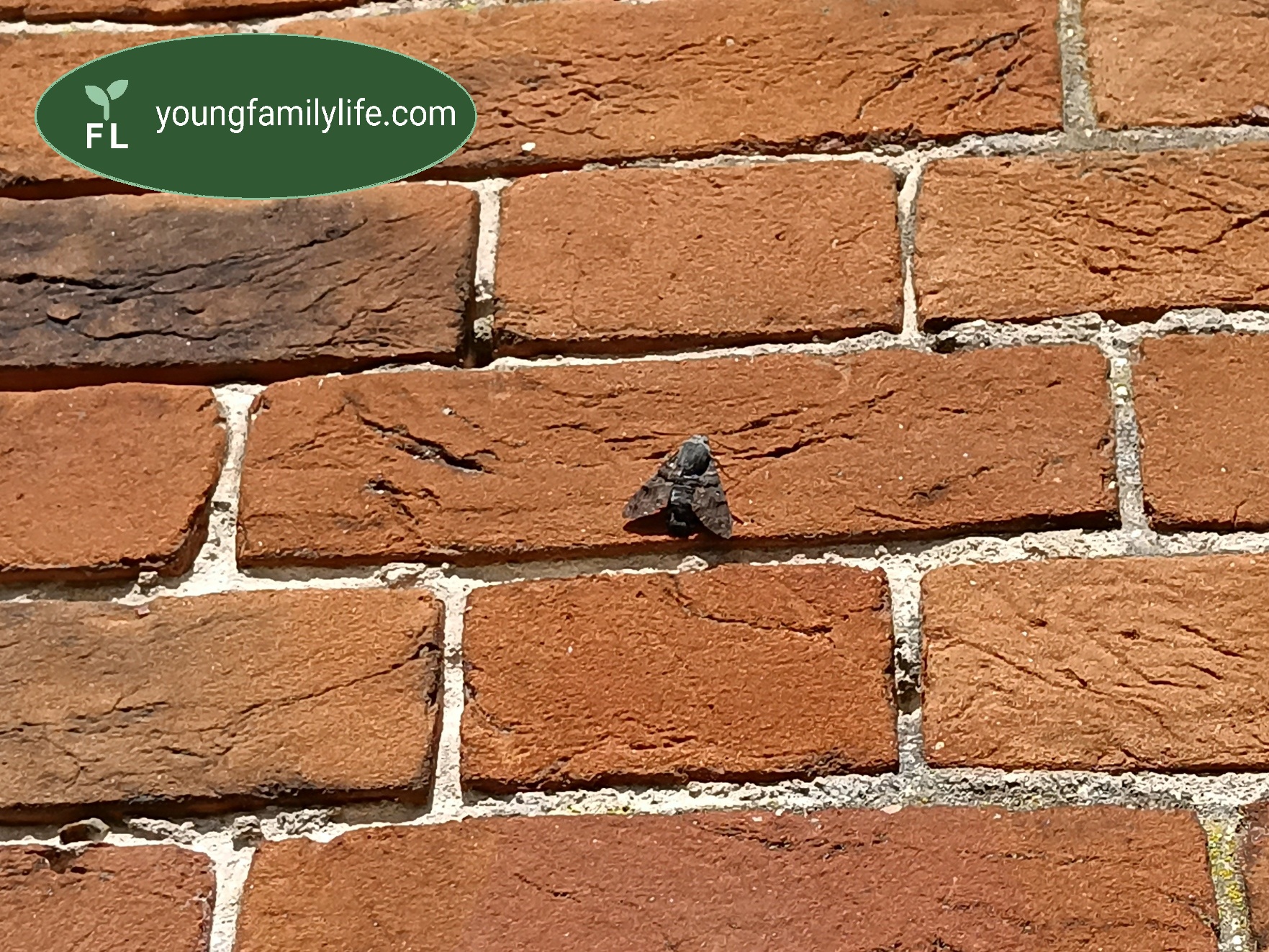
There is a new essay on YFL that grew out of this Common and one small moment on a wall in Bungay. In summer 2026 a Hummingbird Hawk-moth rested on the brick wall of my house, warming itself in the sun, a few yards from a neighbour's Buddleja. Both are newcomers of a kind. Buddleja is a Chinese shrub that reached British gardens in the 1890s and is now found in almost every town. The moth is a migrant from the Mediterranean and North Africa, and 2026 has been an unusual year for it, with Butterfly Conservation and other experts reporting a surge in sightings across the UK.
The essay asks how long a newcomer has to be around before it counts as belonging, and how anyone decides. The answer turns out to be that time on its own settles nothing. British botany separates plants that arrived without human help (native) from those that people introduced before AD 1500 (archaeophytes) and since (neophytes). A migrant can never become an archaeophyte, because that category closed in 1500, but a species that arrives under its own power and then breeds and overwinters follows a different route. The Little Egret, a rare visitor until the 1980s and now an established breeder across much of England, shows what that path looks like. I could find no published rule for how long a colonist has to persist before it stops being a newcomer, and the essay says so.
The second half of the essay is about this Common, and it is the reason I am mentioning it here. Outney's open acid grassland stays open only because it is grazed or cut, and the plants that would close it include native oak. Being native and being wanted turn out to be two different questions. The full essay is here: When Does a Migrant Become "Old Enough"? Archaeophytes, Neophytes and the Moth on the Wall.
The Cut
In autumn 2026 the grassland on the Common that spent spring and summer growing oak saplings, brambles, shrubs and the last of the flowers is due to be cut by machinery. If you walk the Common regularly you will see it happen fast. One week there is a tangle of tall growth, seed heads and late blooms. Soon after, most of it is simply gone.
A lot goes with it. Adult butterflies and other insects that are still on the wing will fly off, and many will be fine. But most of Britain's butterflies spend the winter as eggs, caterpillars or pupae rather than adults (Butterfly Conservation), which means a good number of them are sitting in the vegetation when the machine arrives. A Swiss study of uncut refuges, published in Conservation Evidence, notes that leaving unmown grass can reduce the direct mortality of caterpillars and pupae caused by mowing machinery, and refers to work suggesting butterflies do not necessarily move to a neighbouring uncut meadow when their food and shelter vanish overnight. Casualties are part of what a cut means, and so are the ones that escape.
I would expect the birds to notice before I do. Whatever has been exposed or killed by the cut becomes an easy meal for birds and other animals, so the day after a cut is often busier than the day before it. That is not waste. It is one species' loss becoming another's food, and it is a small version of the theme I keep coming back to in this entry.
Conservation advice for grassland often suggests leaving part of it uncut each year as a refuge. Suffolk Wildlife Trust advises leaving up to a third uncut in any one year, rotating the uncut area, and removing the cuttings. The government's Countryside Stewardship options for species-rich grassland include leaving a proportion uncut as a refuge for invertebrates and small mammals. I don't know how, or whether, that is done on the Common. It is a question rather than a criticism.
Who Decides, and On What Basis
Which brings me to the question the new essay spends most of its time on: who decides how the Common is looked after, and what they base it on.
As far as the published record goes, the Common is managed by a Chairman and six Common Reeves, elected by the owners, who work to a management plan agreed with the district council's tree wardens and the Broads Authority. Apart from the golf course, the Common is in a stewardship scheme run through Natural England. The plan's stated aims are to protect the open character of the Common, its heathland and its water meadows. I am a resident, not a Reeve, and I have not seen the plan itself. As far as I know it has not been published, and neither has the stewardship agreement.
What that means in practice is that land management always produces winners and losers. Keeping the Common open favours grasses, wildflowers and the insects, birds and reptiles that live in open ground. It goes against the oak saplings and brambles that would otherwise fill the space, and against whatever lives in them. The species being favoured are decided by someone. The ones that lose are generally cut back or killed, although some get away. Neither side of that is wrong. It is a set of choices, made on a basis, and I would rather understand the basis than assume it.
The essay also looks at how those choices change. Natural England's own guidance for this kind of habitat says that site objectives and management should be flexible enough to recognise change, including the arrival of new species. Over the years I have lived here, the pattern of grazing and cutting has shifted, and what a "well-managed" common looks like has shifted with it.
Timing: Ditches and Brash Piles
Two other kinds of job show how much timing matters. These are general points about land management, not observations about how the Common is run. I don't know its work schedule.
Ditches. Drainage ditches, or dykes, need maintenance for drainage and flood management, and the Bungay Town Trust notes that water voles are present in the Common's dykes. The Wildlife Trusts advise that habitat work on ditch banks is best done at the end of the breeding season, in late September or October, or by early February before the next one, and that cutting alternate banks leaves somewhere for animals to escape to. A recent review by Conservation Evidence found that disturbance such as ditch cleaning is not automatically harmful and that many communities recover within a few years, but that timing matters. One study found that ditches cleaned between July and September held more amphibian larvae than ditches cleaned in September and October, while the reverse was true for caddis fly larvae. Get the timing wrong, and animals breeding, hibernating or sheltering in the banks can be killed. Water voles are fully protected under the Wildlife and Countryside Act 1981 (Broads Authority), and nesting birds and their nests are protected too.
Brash piles. Tidying up after tree and scrub work often ends with the branches and cut wood piled up to burn. If there is a gap of even a few days between the pile being made and the fire being lit, animals can move in. The RSPCA warns that a bonfire built days in advance is just a pile of logs that wildlife such as hedgehogs, dormice, frogs, toads and insects can nest or hibernate in, and that the longer it sits the more likely it is that something has made a home inside. Its advice, and the British Hedgehog Preservation Society's, is to build the pile on the day it is burned, or move it just beforehand, check it, and light it from one side so anything inside can get out.
Timing does not remove the winners-and-losers problem. It changes who they are.
And If You Know More
If you know how the Common's cutting, ditch work or brash is timed and handled, or if you have records or memories of when cattle grazed the Hards over the years, I would like to hear from you. As with the commons register puzzle in the last entry, a clearer account than the one I have would be very welcome.
References
- Met Office — August 2026 weather statistics, regional breakdown
- Environment Agency — East Anglia water situation report, August 2026; Dry weather and drought in England, weekly reports for 28 August to 3 September, 4 to 10 September, 11 to 17 September and 18 to 24 September 2026
- Butterfly Conservation — species and hibernation FAQ; Migratory moths to look out for in 2026; Humming-bird Hawk-moth species page
- Kühne, I. et al. (2015). Leaving an uncut grass refuge promotes butterfly abundance in extensively managed lowland hay meadows. Conservation Evidence, 12, 25–27
- Suffolk Wildlife Trust — Grassland management for invertebrates; Grassland management for butterflies
- GOV.UK — Countryside Stewardship option CGS22, Manage priority habitat species-rich grassland; option CLIG3, Manage grassland with very low nutrient inputs
- The Wildlife Trusts — Water voles
- Conservation Evidence — The ditch is back! (2026); ditch management synopsis
- Broads Authority — Environmental Standard Operating Procedure 10, Working with water voles (2024)
- RSPCA — How to make a hedgehog-friendly bonfire; British Hedgehog Preservation Society — Stop, Move, Check
- Bungay Town Trust — Bungay Common
- YoungFamilyLife — When Does a Migrant Become "Old Enough"?; Outney Common: What "Common" Actually Means; Outney (Bungay) Common Blog 01
Topics: #OutneyCommon #Bungay #Wildlife #LandManagement #MigrantSpecies #RiverWaveney #Weather