An ordinary assumption, and what testing it involves
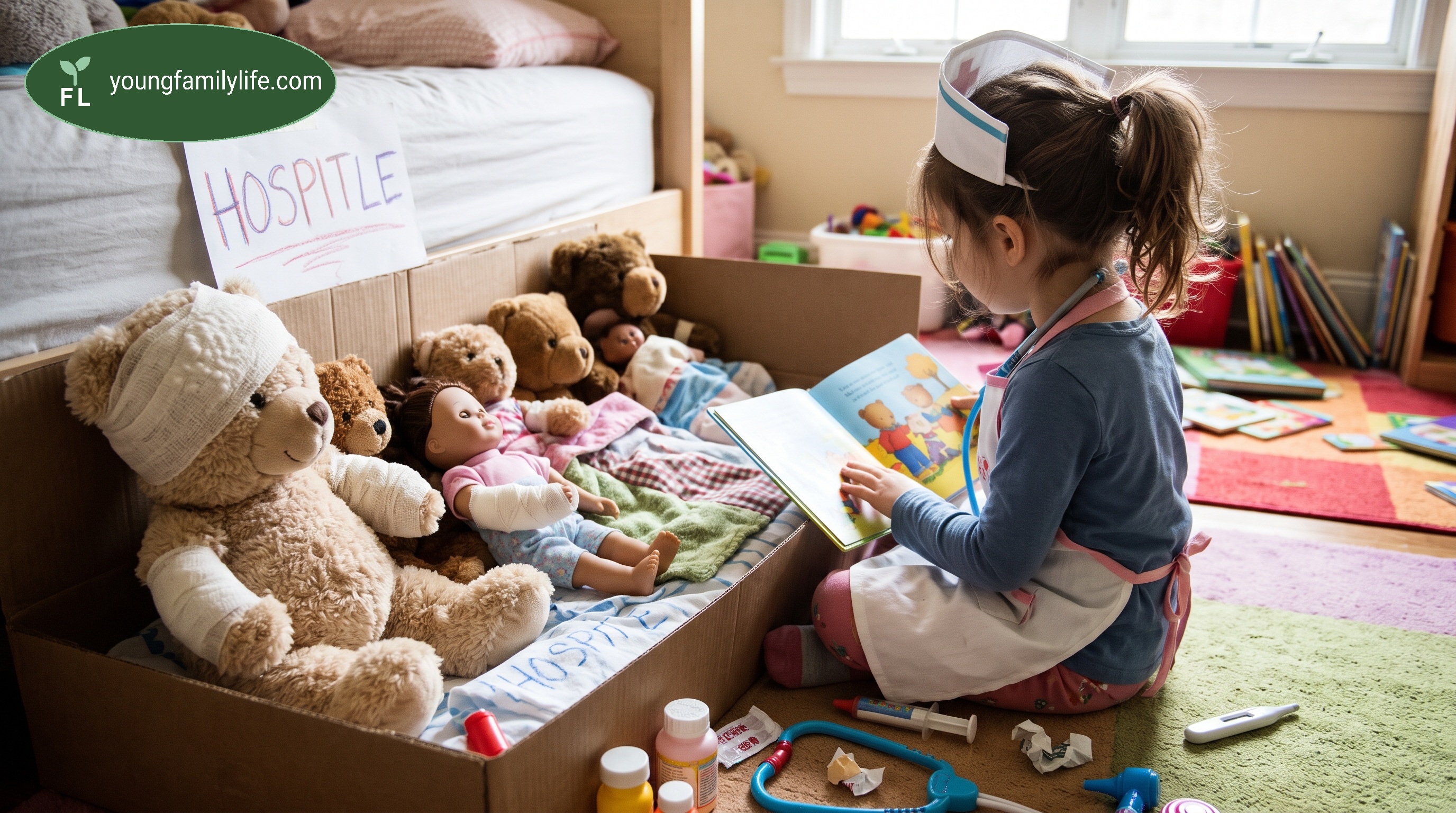
A parent who strokes and soothes a poorly child is doing something most people recognise as natural. Few would ask for evidence that it helps, and it sits within the nurture of a family home that people generally take for granted. A similar assumption sits behind helping work: that people who choose it are, for the most part, motivated by kindness, and that kindness expressed through a relationship is part of what helps.
YFL's essay Natural Healing: Understanding Recovery Across Physical, Psychological, and Therapeutic Domains gives one picture behind the assumption. It describes a broken bone as mending largely through the body's own processes, which proceed when certain conditions are met: nutrition, safety and rest, warmth, protection from re-injury and time. It argues that the helper's part, in medicine and in psychological work alike, is to set up and protect those conditions and not to override the process. For psychological recovery it lists safety, connection, validation, basic needs met and time. On that reading, the parent soothing a child is supplying conditions, and a professional relationship might do the same. That essay is a framework built on analogy, and its staged model is YFL's own account of how the pieces fit. It is offered here as context for the question, not as evidence for the answer.
This essay takes the parent's soothing and the helper's kindness as starting assumptions, not findings. The open question is whether the assumption carries over from the family home into clinical and professional settings, where the helper is usually a stranger, trained, paid and working within a service's rules, and the person may not have chosen them. A judgement that a practice is sound, or long use of it, is not evidence of benefit, as YFL's essay Cures Ahead of the Evidence: When Interventions Judged Beneficial Were Tested shows. The question here is narrower and can be tested: when relationship quality varies, do healing and outcomes vary with it?
The claim that a relationship helps is also made in more formal versions. Carl Rogers (1957) is reported to have put the stronger form: six conditions, in the therapist's stance and in the client's state, held to be necessary and sufficient for therapeutic change (Rogers, 1957, p. 96; Kirschenbaum, 2007). The Power Threat Meaning Framework Overview (Johnstone & Boyle, 2018) refers to healing through relationships, in its account of trauma-informed approaches (p. 16) and in what it says a framework should recognise about personal agency (p. 19). The evidence below comes in three kinds, each stopping at a different point.
A note on reliability
Rogers's claim is described here as reported: it rests on the 1957 paper as quoted in two secondary sources and on Kirschenbaum's biography, whose relevant section has not been read page by page. The Power Threat Meaning Framework passages come from the Overview; the 411-page main document has not been read, so its fuller treatment of the helping relationship is not reported here. The primary sources are listed in References. Figures below are reported as the original authors give them. The weight of evidence is mixed: large meta-analyses for the alliance (295 studies) and for social relationships (148 studies), small studies of 11 to 42 people for wound healing, and observational designs throughout.
Rung one: stress, relationships and physical wounds
Caregiving stress. In a small study of 13 women caring for a relative with dementia and 13 matched controls, a standard small skin wound took 48.7 days to heal in the carers against 39.3 days in the controls (Kiecolt-Glaser et al., 1995). That is about a quarter longer, by simple arithmetic on the reported means.
Examination stress. In 11 dental students, a mouth wound made before a major examination took about 40% longer to heal than an identical wound made during summer vacation. Production of one healing-related signalling molecule (interleukin-1 beta messenger RNA) fell by 68%, and no student healed as quickly during examinations as during vacation (Marucha et al., 1998).
Conflict between partners. In 42 married couples admitted twice to a research unit, blister wounds healed more slowly after a structured conflict discussion than after a social-support discussion. Couples who showed consistently higher hostility healed at 60% of the rate of low-hostility couples (Kiecolt-Glaser et al., 2005). This is the closest rung to the claim in question, because it varies the quality of an interaction between people and measures a bodily outcome.
Across the field. A systematic review of 22 papers, with 11 in the meta-analysis, estimated a correlation of -0.42 (95% confidence interval -0.51 to -0.32) between psychological stress and impaired healing. That is a medium-sized effect. The reviewers called for work on mediating mechanisms and for experimental tests of causal links (Walburn et al., 2009). A later review gives the same average correlation of -.42 (Gouin & Kiecolt-Glaser, 2011).
Limits. The samples in the individual studies are small, and the stressors are not the same as a lack of a helping relationship. These studies show that stress and hostile interaction are linked to slower healing. They do not test whether a supportive helper reverses the effect.
Rung two: social relationships and survival
A meta-analysis of 148 studies with 308,849 participants found an odds ratio of 1.50 (95% confidence interval 1.42 to 1.59) for survival in people with stronger social relationships. The authors reported the pattern as consistent across age, sex, initial health and follow-up period, and the strongest association came from complex measures of social integration (Holt-Lunstad et al., 2010). The authors compared the influence of relationships on mortality with that of well-established risk factors such as smoking and alcohol.
The studies measure the everyday relationships of ordinary life, not helping relationships. They are observational, so illness can also reduce social contact, and the review's own conclusion is one of comparability of influence, not a trial of an intervention.
Rung three: the alliance in psychotherapy
The working alliance, meaning the collaborative bond between helper and person and their agreement on goals and tasks, is the most studied relationship variable in therapy. A synthesis of 295 independent studies covering more than 30,000 patients found an overall alliance-outcome correlation of r = .278 (95% confidence interval .256 to .299), consistent across treatment approaches, patient characteristics and countries. Two per cent of the effect sizes were negative (Flückiger et al., 2018). By simple arithmetic, a correlation of that size accounts for roughly 8% of the variation in outcomes.
Direction of cause. A strong alliance may help people improve, but early improvement may equally make an alliance feel strong. One multilevel study of 331 patients seen by 80 therapists found that differences between therapists in the alliance they formed predicted outcome, while differences between patients in the alliance were unrelated to outcome (Baldwin et al., 2007). A later multilevel meta-analysis of 152 studies supported the importance of the therapist's contribution (Del Re et al., 2021; abstract read, full text not). This pattern is harder to explain by patients simply improving, and it points to the helper's side of the relationship, though it remains observational.
Limits. The alliance is measured within structured therapy that people chose to attend. Mandated, involuntary or child protection work is a different setting, and no test of transfer was found in the sources gathered for this essay. YFL's essay Alliance Evidence in Mandated Work: What Transfers to Child Protection takes up that gap.
Condition or cause?
Taken together, the three rungs are consistent: better relationships go with better healing, survival and outcome, and effects are of moderate size. That fits a relationship acting as a contributory condition, one of several, as YFL's Natural Healing essay describes, though a fit is not a test of it. A moderate average effect also raises the question of scale, which Small Effects at National Scale: The Prevention Paradox and the Helping Relationship takes up, and the question of what happens when a practice judged sound is tested, which Cures Ahead of the Evidence: When Interventions Judged Beneficial Were Tested takes up. It does not fit a claim that relationship is sufficient by itself, and the alliance correlation leaves most of the variation in outcome unexplained.
Two cautions follow. First, a moderate average hides a wide spread: the alliance evidence includes cases where the correlation was negative. Second, a relationship that feels good is not the same as one that heals. Compliance performed for the helper's benefit can look like an alliance (see YFL's essay Disguised Compliance: The Confidence Measure's Hardest Case), which is why measurement matters.
The evidence supports the helping relationship as a real and measurable correlate of healing and outcome, consistent with a contributory role among several conditions. None of these studies tests a helping relationship as an intervention against a comparison group, the standard that YFL's Cures Ahead of the Evidence essay applies to cure claims. The better-supported claim is about association, not proof of cause. It does not support treating the relationship as the whole of the answer, and none of the studies reviewed here was gathered in child protection practice, in England or elsewhere. The countries in which the individual studies were run have not been tabulated for this draft, and helping systems differ between countries. Back at the opening question, the evidence is consistent with the assumption in voluntary therapy, and no test was found for professional work with people who did not choose the helper. None of the studies tested the soothing-parent case directly: they link stress and hostility to slower healing, and do not show that comfort speeds it. YFL's Natural Healing essay also allows that connection from family and friends may be enough for recovery, a distinction these studies do not test because they measure helping relationships only. YFL offers this as information for readers to weigh, not as instruction.
References
Baldwin, S. A., Wampold, B. E., & Imel, Z. E. (2007). Untangling the alliance-outcome correlation: Exploring the relative importance of therapist and patient variability in the alliance. Journal of Consulting and Clinical Psychology, 75(6), 842-852.
Del Re, A. C., Flückiger, C., Horvath, A. O., & Wampold, B. E. (2021). Examining therapist effects in the alliance-outcome relationship: A multilevel meta-analysis. Journal of Consulting and Clinical Psychology, 89(5), 371-378.
Flückiger, C., Del Re, A. C., Wampold, B. E., & Horvath, A. O. (2018). The alliance in adult psychotherapy: A meta-analytic synthesis. Psychotherapy, 55(4), 316-340.
Gouin, J.-P., & Kiecolt-Glaser, J. K. (2011). The impact of psychological stress on wound healing: Methods and mechanisms. Immunology and Allergy Clinics of North America, 31(1), 81-93.
Holt-Lunstad, J., Smith, T. B., & Layton, J. B. (2010). Social relationships and mortality risk: A meta-analytic review. PLoS Medicine, 7(7), e1000316.
Johnstone, L., & Boyle, M. (2018). The Power Threat Meaning Framework: Overview. British Psychological Society.
Kiecolt-Glaser, J. K., Loving, T. J., Stowell, J. R., Malarkey, W. B., Lemeshow, S., Dickinson, S. L., & Glaser, R. (2005). Hostile marital interactions, proinflammatory cytokine production, and wound healing. Archives of General Psychiatry, 62(12), 1377-1384.
Kiecolt-Glaser, J. K., Marucha, P. T., Malarkey, W. B., Mercado, A. M., & Glaser, R. (1995). Slowing of wound healing by psychological stress. Lancet, 346(8984), 1194-1196.
Kirschenbaum, H. (2007). The life and work of Carl Rogers. PCCS Books. [Section "Necessary and Sufficient Conditions" in "The Chicago Years - Part Two"; chapter number and pages to be confirmed.]
Marucha, P. T., Kiecolt-Glaser, J. K., & Favagehi, M. (1998). Mucosal wound healing is impaired by examination stress. Psychosomatic Medicine, 60(3), 362-365.
Rogers, C. R. (1957). The necessary and sufficient conditions of therapeutic personality change. Journal of Consulting Psychology, 21(2), 95-103.
Walburn, J., Vedhara, K., Hankins, M., Rixon, L., & Weinman, J. (2009). Psychological stress and wound healing in humans: A systematic review and meta-analysis. Journal of Psychosomatic Research, 67(3), 253-271.
Topics: #HelpingRelationship #TherapeuticAlliance #Healing #EvidenceGrading #InformationWithoutInstruction