Familiar Situation
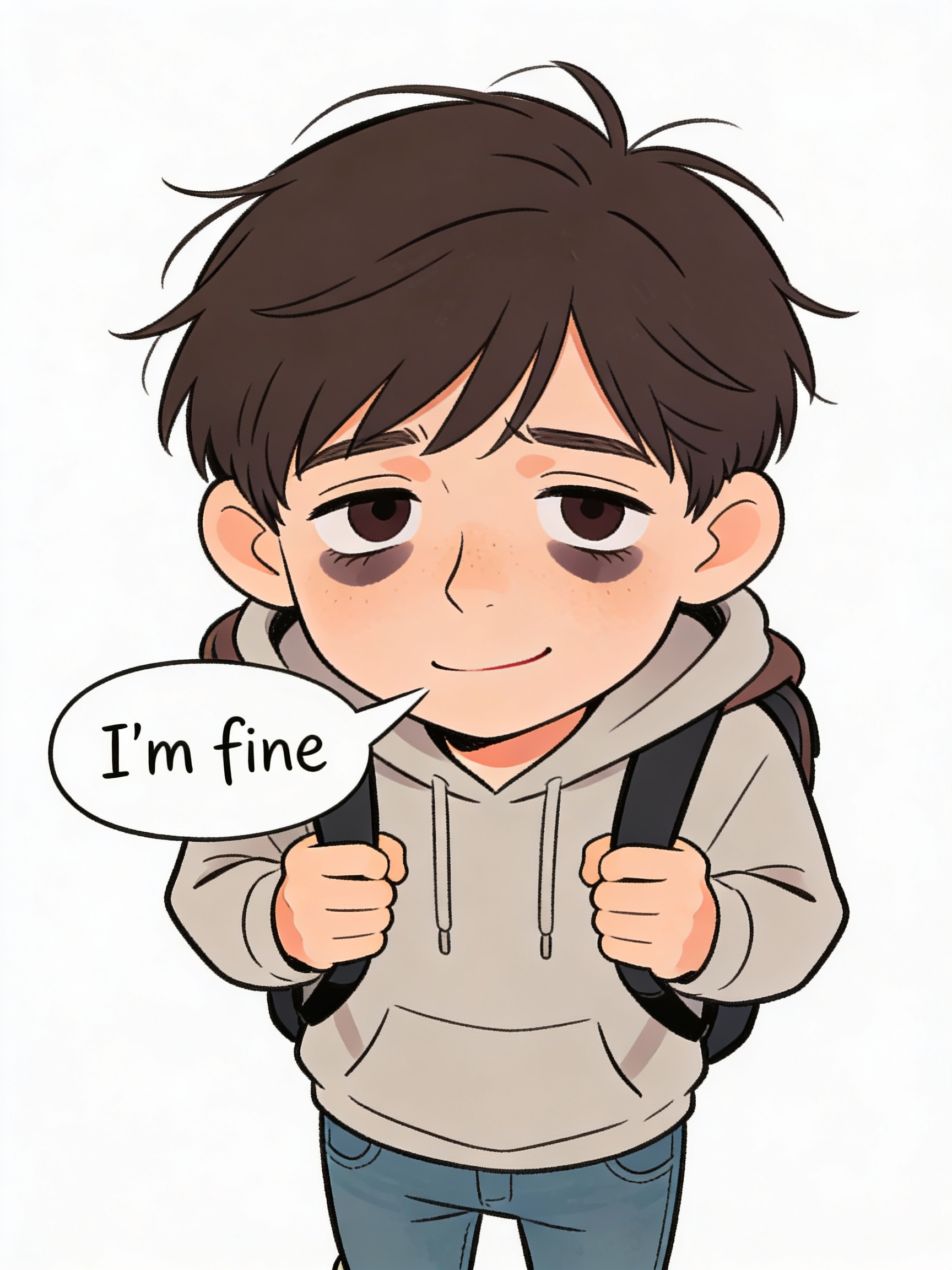
A teenager walks in from school. Parents ask how the day went. "Fine," they say. But look at everything else. Shoulders slumped, pulling inward. Voice flat, stripped of energy. Eyes down, avoiding contact. They drop their bag and head straight to their room. The word says "fine" but the body's screaming something different.
People see this everywhere. Someone at work says "Yeah, I'm totally on board" whilst arms fold tight, jaw clenches, voice goes cold. A mate insists "I'm not upset" through gritted teeth with face and neck flushing red. A kid says "nothing's wrong" whilst tears form, voice catching.
When words say one thing and bodies say another, people believe the body. Research just proves what everyone already knows.
What The Research Actually Found
Some psychologists looked at loads of studies about body language. They found something basic: the body is always communicating. It can't be turned off.
When people speak, words have a start and finish. But the body never stops. Even when silent, even sitting still - face, posture, voice tone, breathing - all of it keeps broadcasting.
Why? Evolution. Before language, humans needed ways to signal danger or safety, threat or friend. Bodies developed automatic systems that broadcast emotional states without conscious control. These systems are older than language, deeper in the brain, and they still run constantly.
How? Through multiple channels at once. Facial muscles tighten or relax. Posture shifts - pulling in when defensive, opening when comfortable. Voice changes pitch and pace. Hands fidget, gesture, or go still. Breathing speeds up or slows. Skin flushes or pales. Most happens without people knowing, shaping every conversation more than words do.
How People Try (And Fail) To Fake It
Researchers looked at doctors and nurses with patients. When doctors were warm - friendly face, kind tone, relaxed posture - patients were way more satisfied. When they looked stressed - even if their words were fine - patients felt worse.
Why? Doctors are human. When stressed or rushed, their bodies show it automatically. When they genuinely care and have time, their bodies show that too.
How? Stressed doctors have tight facial muscles, especially around eyes and mouth. Voice speeds up or goes flat. They lean back slightly rather than forward. Hands move quickly, impatiently. Eye contact becomes brief, darting. Relaxed, caring doctors show the opposite.
This happened even though doctors are trained in communication. Their actual body language - the stuff they weren't consciously controlling - had a massive effect.
The problem: controlling everything the body's doing - face, tone, posture, breathing, hands, all at once - takes constant effort most can't maintain. The body broadcasts the actual state whether someone likes it or not.
When People Can Control It
Some people do manage this control remarkably well. Watch a skilled actor perform grief convincingly despite feeling fine. Or a professional presenter maintain warm, engaged body language throughout a long, tedious conference. Or someone deliberately deceiving another person with apparently genuine sincerity.
Why can these people do what most can't? This is acting - deliberate, trained performance rather than spontaneous everyday behaviour. Professionalism is acting. Deliberate deception is acting. Stage and screen acting is the clearest example. All require extensive skill and practice.
How does this work? Through years of training in consciously controlling body signals. Actors learn to produce genuine-looking smiles (engaging eye muscles, not just mouth). They practice maintaining specific postures and gestures. They train voice control - pitch, pace, warmth. They manage breathing patterns. They coordinate multiple channels simultaneously with conscious effort.
But this takes enormous practice and concentration. Even skilled performers usually show small "leaks" under pressure - a microexpression that flashes truth, a brief tension in posture, a momentary voice change. And maintaining this control exhausts mental resources. This kind of deliberate performance is completely different from everyday spontaneous body language, which happens automatically whether people want it to or not.
The Teenager's Body Tells The Story
Back to that teenager. They might have good reasons for saying "fine." Maybe they're still working out what happened. Maybe they don't want to worry their parents. Maybe they can't find the words. Maybe last time they shared, it went badly.
The word "fine" is a choice. But look at what wasn't chosen. Shoulders slumped forward, body pulling inward. Voice flat because tension restricts airflow. Eyes down because meeting someone's gaze requires energy they don't have. Hands maybe gripping bag straps or picking at something. Breathing shallow or heavy.
Why? The teenager's body is responding automatically to their internal state. Stress, sadness, worry create physical changes. Muscles tense or slacken. Breathing changes. Energy drops. Not conscious decisions - automatic responses.
How? Through dozens of small signals at once. The way shoulders curve. Voice quality - pitch, pace, energy. Where eyes focus or avoid. How hands move or stay still. The overall energy radiating from them. Each signal alone might be subtle. Together they're unmistakable.
Parents picking up on these signals aren't being clever. They're just receiving the broadcast that never stopped.
When Words And Bodies Don't Match
Research keeps finding the same thing: when words say one thing and body language says another, people believe the body language. Nobody learns this rule. They just do it without thinking.
Take blushing. Someone denies being embarrassed, but their face and neck go red. Why? Blood vessels dilate automatically under social stress. How? The nervous system triggers increased blood flow to facial skin. Completely involuntary - the visible flush contradicts the denial instantly.

Or fidgeting. Someone claims they're "totally relaxed" whilst hands pick at nails, feet tap, weight shifts constantly. Why? Nervous energy needs an outlet. Stress hormones create restlessness. How? Small motor movements increase - hands seek something to do, legs bounce, posture keeps adjusting. The body can't stay still when stressed.
One study looked at how people judge if someone's being responsive and understanding. Body language counts for more than what people say, especially when empathy (understanding and sharing someone's feelings) matters.
This makes sense. Humans have only had proper language for maybe 100,000 years. People have been reading posture, expressions, and sounds for way longer. The systems that read body language are older, deeper, faster than the bits that process words.
The Work Meeting
Picture a team meeting. Manager says, "I really want everyone's honest feedback on this." Perfect words - inviting, democratic, collaborative. But look at what's actually happening. Arms crossed tight over chest, creating a barrier. Jaw clenched, showing tension. Voice clipped and quick, cutting off warmth. Eyes narrowing when someone starts to speak.
Why? The manager might genuinely think they want feedback. But their body knows they're threatened by criticism or stressed about time. These feelings create automatic physical responses they're not fully aware of.
How? Arms crossing physically shields the body. Jaw clenching happens when holding back words or emotions. Voice quality changes under stress - becomes sharper, faster, or flat. Eyes narrow when evaluating threat or feeling defensive. Together they're unmistakable.
Everyone in the room gets both messages. Words say "feedback welcome." Body says "challenge me and you'll regret it." People respond to the body's message even when they can't explain why the invitation didn't feel genuine.
This creates what researchers call the Feedback Paradox (when someone asks for something but their behaviour shows they don't really want it). Companies ask for feedback whilst the attitude and behaviour of the people running them screams that honest feedback isn't safe. When people stop giving honest feedback, leaders get confused - "But we asked!" - completely missing that their body language said the opposite.
What This Means In Real Life
This research confirms what people see all the time. The mate who says they're "happy for you" but their face and voice say otherwise - mouth pulled tight rather than genuinely lifted, voice pitch strained rather than naturally pleased.
The family member claiming they're "not angry" when every muscle screams fury - shoulders raised and tight, hands clenched, breathing quick and shallow, voice hard.
The person at work who says they're "open to questions" whilst defensive posture signals the opposite - arms protecting chest, body angled away, voice cold.
Or someone telling an untruth - voice goes up in pitch (stress affects vocal cords), breathing becomes irregular (anxiety changes breathing patterns), hands fidget or go unusually still (nervous energy needs management).
Every time: mixed messages from different channels (different ways of communicating - words, face, body, tone). People believe the body's constant broadcast. Words still matter. But when words and bodies conflict, the body signal usually wins.
Why And How Bodies Do This
Bodies communicate constantly because evolution built them to. Before language, humans needed ways to signal safe or dangerous, friend or threat, distressed or calm. These signals still work today.
The systems that create and read these signals run automatically. Someone doesn't decide to tense their shoulders when stressed - it just happens. The stress response triggers muscle tension. Someone watching doesn't consciously decode the tension - they just feel it. Their brain reads the pattern instantly, below awareness.
How does this work? The limbic system (the emotional centre of the brain) triggers responses throughout the body when someone experiences emotions. Fear tightens muscles, quickens breathing, widens eyes. Happiness relaxes facial muscles, brightens eyes, lifts posture. Sadness drops energy, slackens muscles, pulls posture inward. These happen before conscious thought.
This makes body signals way harder to control than words. Maintaining complete control over facial muscles, posture, voice, hands, breathing, and everything else takes exhausting effort hardly anyone can maintain.
Even when someone tries to fake it, small "leaks" give them away. A genuine smile uses muscles around the eyes - crow's feet appear. A fake smile just uses the mouth. Voice pitch changes under stress, even when words sound calm. Hands might freeze unnaturally still, or fidget despite attempts to control them. The body tells the truth through dozens of small channels most people aren't consciously aware of controlling.

The Research Behind This
This comes from loads of different studies. One big review looked at decades of research across therapy, healthcare, education, relationships, different cultures. Same patterns kept showing up: body language works constantly, goes both ways, and mostly happens without conscious control.
Other research backed this up. Scientists looked at how different cultures use body signals. Turns out, whilst cultures vary in specific expressions, the basic pattern works the same everywhere.
The research doesn't say bodies "never lie." People can try to control their body signals. Actors train for years. People learn to keep "professional" faces on regardless of how they feel. But these attempts take serious effort and rarely work completely. Even skilled people usually "leak" signals that show their real state.
Bodies Are Amazing
The body tells what words hide. Not through magic. Through dozens of automatic physical signals operating constantly across multiple channels that can't be fully controlled.
YFL Values: Information Without Instruction
This essay presents research on body language. It describes patterns people can see in everyday life. Bodies send constant signals through posture, expressions, and tone. These signals mostly happen without conscious control. When bodies and words don't match, research shows people usually believe bodies. The essay gives the evidence. Readers decide what it means for them.
Further Reading
Scientific Research
- Perspectives on Psychological Science - Misconceptions about nonverbal communication - Big 2023 review that looked at what research actually shows about body language
- Patient Education and Counseling - Nonverbal communication meta-analysis - 2012 review of studies looking at how doctors and nurses communicate with patients
Understanding Communication
- Wikipedia: Nonverbal communication - Overview of types, how it works, and cultural differences
- The Conversation: What your body language says about you - Easy-to-read articles on communication research
Related Research
- Frontiers in Psychology - Measuring nonverbal effectiveness - 2024 study developing ways to measure how effective people's body language is
Related YFL Essays
Eric Berne's Transactional Analysis: From Freudian Theory to Observable Interaction looks at how psychology shifted from studying stuff you can't see (thoughts) to stuff you can see (communication patterns) - including why Berne's framework said you have to pay attention to complete communication, not just words.
Beyond Words: What Is Missed When Parents and Practitioners Focus on What is Spoken examines why families stay volatile despite therapy, presenting research on how constant body signals shape relationships more powerfully than what people actually say.
The Feedback Paradox: When Asking Signals Not Listening investigates how organisations ask for feedback whilst simultaneously communicating through behaviour and body language that honest feedback isn't actually safe.
Topics: #NonverbalCommunication #BodyLanguage #Communication #Psychology #HumanBehaviour #Research #Relationships #YoungFamilyLife
Copyright Notice
© 2026 Steve Young and YoungFamilyLife Ltd. All rights reserved.
"Hey!, Want To Know" is a copyrighted content format of YoungFamilyLife Ltd.
This essay was developed collaboratively using AI assistance to research academic sources and refine content structure, while maintaining the author's original voice, insights, and "Information Without Instruction" philosophy. No part of this essay may be reproduced, distributed, or transmitted in any form or by any means, including photocopying, recording, or other electronic or mechanical methods, without the prior written permission of the copyright holders, except in the case of brief quotations embodied in critical reviews and certain other noncommercial uses permitted by copyright law.
For permission requests, contact: info@youngfamilylife.com