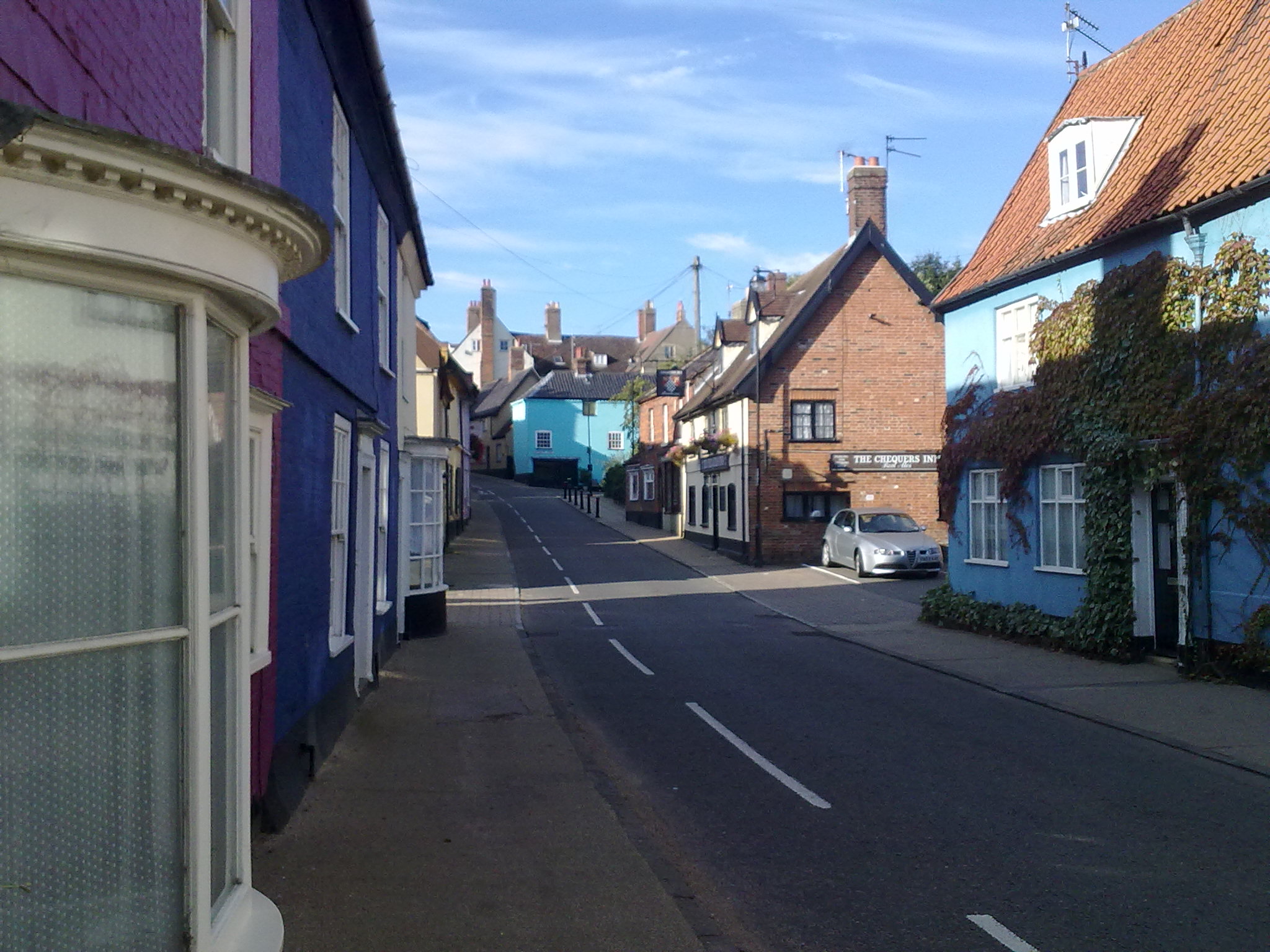
When I moved to Bungay in 2011, one of the first things I noticed was how much people cared about their town. Not in a vague, abstract way, but in a roll-up-your-sleeves-and-do-something-about-it way. Petition campaigns, public meetings at the Fisher Theatre, heated debates about traffic schemes, residents organising speedwatch groups with handheld radar guns. This is a town where people don't just complain—they organise.
That's rather wonderful.
I've spent over twenty years working in family safeguarding and early help, and I've learned something important: concern doesn't need statistical justification to be real. When people feel worried about something, that feeling matters. When they come together to address it, that community spirit matters even more.
But here's the thing about road safety campaigns: where you focus your energy matters too. And sometimes the data reveals patterns we might not expect.
The Campaigns
Between 2012 and 2014, Bungay went through what might politely be called a "spirited debate" about traffic management. Suffolk County Council proposed making the experimental one-way system on Trinity Street, Wharton Street, and St Mary's Street permanent, with accompanying improvements: courtesy crossing points, widened pavements, sandstone paving, new footways.
The town divided. Some residents argued it was a waste of taxpayers' money that would kill local businesses. Others felt it created smoother, safer traffic flow. The debate was passionate enough to warrant a public meeting at the Fisher Theatre in February 2013. Eventually, the improvements were made permanent and implemented between January and April 2014.[3]
More recently, Bridge Street residents have raised concerns about speeding traffic, holding protests using carved pumpkins—not faces, but the number "20" to highlight the speed limit. It's worth noting that this is the same street where a life was lost in 2016. The 20mph limit has been in place since 2004, complete with a flashing speed sign, but residents report ongoing issues with compliance.[4]
What residents have also observed is that speeding tends to worsen at particular times of day—around 6am, 2pm, and 10pm. These correspond to shift handovers at local factories, which bring not only increased traffic volumes but, anecdotally, higher speeds along certain routes. It's the kind of pattern that residents notice instinctively but that official data doesn't capture.
Bungay also has an active Community Speedwatch group, part of Suffolk Police's countywide network. Trained volunteers monitor designated locations, recording vehicles exceeding 35mph in 30mph zones. Warning letters go to registered keepers. It's educational rather than enforcement, but it's community members giving their time because they care.[5]
This is classic small-town civic engagement. People organising, campaigning, volunteering. Looking out for each other.
The Losses
Between 2011 and 2024, several people lost their lives on roads in and around Bungay. These tragedies touched families and friends, and their absence is still felt in the community. If you've lived here during that time, you'll likely remember:
May 2016: A man was killed in a hit-and-run on Bridge Street in the early hours. He was walking his dog when he was struck by a vehicle that did not stop. The driver failed to summon emergency services and fled the scene. This wasn't simply a matter of speed—it was dangerous carelessness at its most serious. The driver was later convicted.[2]
May 2019: A 74-year-old cyclist was killed in a collision with an HGV on St John's Road (A144).[2]
Official parish statistics record four fatal collisions:[1]
2013: A pedestrian killed on the A144
2015: A motorcyclist near the town outskirts
2019: A single-vehicle collision on the A143 at Bungay/Wainford border
2024: A fatal collision on the A143 near Alburgh/Bungay border
That's at least four lives lost, possibly six depending on how the Bridge Street and St John's Road incidents were classified in official statistics. Either way, these losses affected families, friends, and a community that remembers.
The Location Mismatch
Here's the pattern that matters: not a single one of these losses occurred on the streets that generated passionate debate and public expenditure between 2012 and 2014.
Let's be clear about where these tragedies happened:
- Bridge Street (2016 hit-and-run)
- St John's Road/A144 (2019 cyclist, 2013 pedestrian)
- Town outskirts (2015 motorcyclist)
- A143 borders (2019, 2024)
The controversial town centre improvements focused on St Mary's Street, Trinity Street, and Wharton Street. Zero deaths on those streets. Not before the improvements, not after, not during the fourteen years between 2011 and 2024.
Meanwhile, these losses occurred on Bridge Street, St John's Road, the A144, the A143, and town outskirts. Completely different locations.
The timeline is revealing: September 2012 the experimental one-way system began, February 2013 the public meeting at the Fisher Theatre, January-April 2014 the improvements made permanent. No lives were lost on St Mary's Street, Trinity Street, or Wharton Street—not before, not during, not after.
This isn't to say the town centre improvements were pointless. They may have prevented collisions that would otherwise have occurred. They contribute to a calmer, more pedestrian-friendly environment. Road safety isn't solely about preventing fatalities.
There's also a possibility worth considering: the absence of fatalities on those streets could itself be evidence that the attention worked. Community scrutiny — speedwatch volunteers monitoring speeds, residents watching, the general heightened awareness that comes with sustained civic engagement — may well have deterred dangerous behaviour on those streets. We can't know this for certain, because you can't count the accidents that didn't happen. But it's a legitimate reading of the same data, and it's worth sitting with before drawing conclusions about where community energy was or wasn't well spent.
But the data reveals an unmistakable pattern: community energy focused intensively on one set of locations, while actual fatalities occurred in completely different places.
The Numbers in Context
Over the fourteen-year period from 2011 to 2024, the per capita fatality rates tell an interesting story:
- Bungay: 4.20-6.30 deaths per 100,000 population per year (depending on whether you count 4 or 6 deaths)
- Suffolk: 3.34 deaths per 100,000 population per year
- UK: 2.77 deaths per 100,000 population per year
Bungay's rate is numerically higher. That gives statistical foundation to residents' concerns about road safety, and it reflects real losses experienced by the community.
But here's the challenge with small numbers: in 2024, Bungay experienced one fatality. In a population of around 5,200, that represents a rate of 19.30 per 100,000—nearly seven times higher than the UK average. The previous year, with no lives lost, Bungay appeared remarkably safe. A single loss swings the rate from near-zero to appearing extraordinarily dangerous. The four to six fatalities over fourteen years, whilst each a profound loss, are too few to allow confident statistical comparisons with larger populations. The uncertainty is enormous. What we CAN say with confidence is where these tragedies occurred—and that's what matters for directing community energy effectively.
It's also worth acknowledging that fatalities are only part of the picture. Serious road traffic accidents are recorded—incidents causing significant damage, road closures, or serious injuries ranging from hospital treatment through to life-changing consequences. But the way this data is recorded doesn't lend itself to straightforward like-for-like comparison between local, county, and national levels. So whilst serious incidents are captured, using them to judge the effectiveness of safety campaigning at a parish level against county or national benchmarks remains extremely difficult.
And there's a further gap that no dataset can fill: the lived observation of danger. Residents don't just notice fatalities—they notice patterns. The way speeding worsens during factory shift handovers. The feeling of unsafe speeds on particular streets at particular times. These observations are real and they're meaningful, but they don't appear in any official statistics. The data records what happened after the fact. It doesn't record what residents experience happening every day.
What Actually Works
For communities genuinely wanting to reduce speeds, the research is clear:
Signs and road markings alone don't work well. Where 20mph limits were introduced with signs only, speeds dropped just 1-2mph and casualty reductions averaged 11%.
Physical measures are dramatically more effective. When 20mph limits include physical traffic calming—road humps, mini-roundabouts, road narrowing—speeds drop below 20mph and casualty reductions jump to 40%. That's nearly four times better for reducing risk.[9]
Mini-roundabouts create equal priority, naturally slowing traffic. Speed cushions (1.5m wide) allow emergency vehicles to straddle them while slowing cars. Gateway treatments use red surfacing and road markings to create psychological awareness of different zones. Road narrowing forces careful positioning.
The most effective approaches combine several measures: gateway treatments, regular visual reminders, strategic physical calming at key points.[10][11]
What This Means for Bungay
So where does this leave us?
The civic engagement Bungay has shown—speedwatch volunteers, petition campaigns, public meetings—creates the social connections that make small towns resilient. That matters independently of whether the focus aligns perfectly with the statistical evidence.
But if the goal is reducing the risk of future tragedies, evidence should inform where limited resources go.
The challenge for any small community is channelling admirable civic spirit toward places where it might reduce future risk. Bridge Street residents protesting about speeding are right to focus there—a life was lost on that street. Though the 2016 tragedy involved wider issues of dangerous carelessness and failure to stop than speed alone could account for, reducing speeds on a street where a pedestrian was killed remains a reasonable and evidence-based concern. The same applies to St John's Road, the A-roads, the approaches where lives have been lost.
If physical measures get implemented in these locations—not just signs—the research suggests meaningful risk reduction is possible. A 40% casualty reduction isn't guaranteed, but it's the difference between hoping for change and implementing what's been proven to reduce the likelihood of future tragedies.
But this isn't an either/or argument. A town centre where residents and visitors feel safe matters enormously—not just for road safety, but for the everyday life of Bungay. Shops, cafés, pubs, and restaurants thrive when people feel comfortable walking through town. Families choose where to spend their weekends based on how a place feels. Visitors form first impressions within minutes. A calmer, safer-feeling town centre contributes to the overall wellbeing of the community in ways that go well beyond collision statistics. That's a perfectly good reason to care about town centre traffic—independent of where the fatality data points.
The question isn't whether to invest in a safer town centre. It's whether the energy and resources directed toward road safety campaigning are also being aimed at the locations where the evidence suggests the greatest risk to life.
After fifteen years here, I've learned that Bungay responds well to evidence when it's presented fairly. This is a community that organises, that acts, that cares enough to turn concern into action.
This essay is part of YoungFamilyLife's "Bungay Life" series, exploring the realities of family life in this distinctive Suffolk market town. The approach is "Information Without Instruction"—providing evidence-based information as a springboard for your own thinking, without prescribing what you should do with it.
References
Bungay Road Traffic Incidents
[1] Department for Transport (2025). 'STATS19 Road Safety Data'. Parish-level collision statistics for Bungay, Suffolk (2011-2024). Four fatal collisions recorded: 2013 (A144 pedestrian), 2015 (town outskirts motorcyclist), 2019 (A143 Bungay/Wainford border), 2024 (A143 Alburgh/Bungay border).
[2] BBC News (2016, 2019). Local news reports: May 2016 Bridge Street hit-and-run, May 2019 St John's Road cyclist-HGV collision.
Local Traffic Schemes
[3] Beccles & Bungay Journal (2013). 'Bungay one-way system split opinion at public meeting'. February 2013.
[4] East Anglian Daily Times (2023). 'Bungay Halloween pumpkins used to spook speeding drivers'. 2 November 2023.
[5] Suffolk Police (2024). 'Keeping Our Roads Safe Report 2023-24'. Suffolk Constabulary.
Regional Statistics (2011-2024)
[6] United Kingdom: 25,838 total fatalities, average annual rate 2.77 per 100,000 population
[7] Suffolk: 354 total fatalities, average annual rate 3.34 per 100,000 population
[8] Bungay Parish: 4-6 total fatalities, average annual rate 4.20-6.30 per 100,000 population
Traffic Calming Research
[9] Parliamentary Advisory Council for Transport Safety (PACTS) and Road Safety Trust (2023). '20mph Research Study'. Signed-only schemes: 11% casualty reduction. Physical measures: 40% casualty reduction.
[10] Transport Research Laboratory (TRL). 'Traffic Calming in Villages on Major Roads'. TRL Report 385.
[11] Department for Transport (2007). 'Local Transport Note 01/07: Traffic Calming'.
Topics: #RoadSafety #BungayLife #CommunityEngagement #TrafficCalming #EvidenceBasedApproach #SufffolkLife #CivicEngagement #SmallTownLife
Copyright Notice
© 2026 Steve Young and YoungFamilyLife Ltd. All rights reserved.
This essay was developed collaboratively using AI assistance to research academic sources and refine content structure, while maintaining the author's original voice, insights, and "Information Without Instruction" philosophy. No part of this essay may be reproduced, distributed, or transmitted in any form or by any means, including photocopying, recording, or other electronic or mechanical methods, without the prior written permission of the copyright holders, except in the case of brief quotations embodied in critical reviews and certain other noncommercial uses permitted by copyright law.
For permission requests, contact: [email protected]