Lying is something the brain learns to do
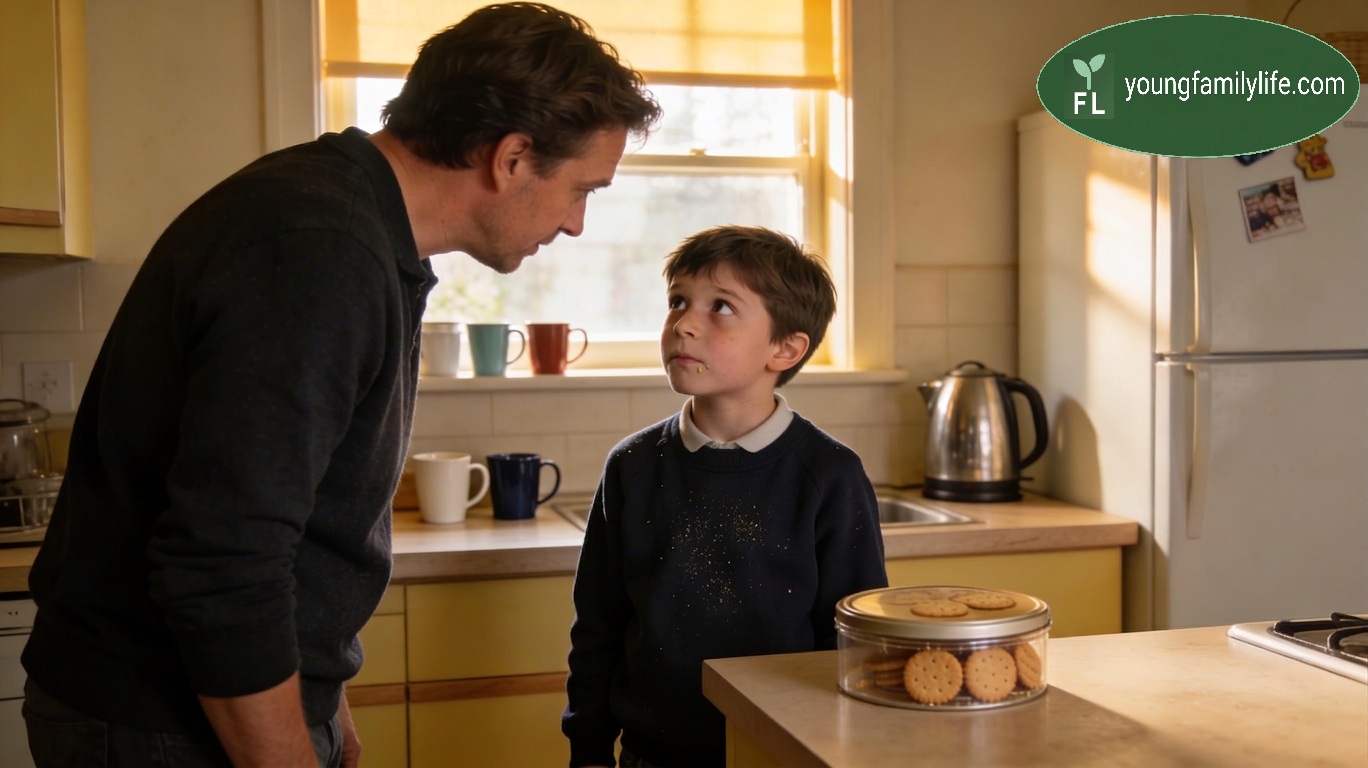
Most children tell their first deliberate lie somewhere between ages three and five. The biscuit is gone, the crumbs are on their jumper, and yet they say they didn't eat it. It feels like a problem. But researchers who study child development say it is actually a sign that something is going right.
To pull off a lie, a child has to work out what another person thinks is true — and then say something different. That is not easy. It means the child has figured out that other people have their own thoughts, and that those thoughts can be wrong. Children who can do this tend to be better at understanding other people in general. The skills involved are the same ones that later help children make friends, handle arguments, and know when to speak and when to stay quiet. None of that is a bad thing.
That is not a reason to let lying go unchallenged. But knowing what is actually happening makes it easier to respond to it well.
Most lying has a reason behind it
Children lie to avoid getting into trouble. They lie to get something they want. They lie to protect a friend — which is the kind of lie most adults find hardest to be angry about, because they would probably do the same.
There is also a less obvious reason. A child who cannot keep anything private, who cannot deflect a question or invent an excuse, is more exposed than one who can. Being able to keep something to themselves, to manage what other people know about them, is a useful social skill. It is not exactly the same as lying, but it uses the same basic ability. Research suggests it is part of how children learn to keep themselves safe in social situations.
A straightforward example: a child waiting outside a shop on their own is approached by a stranger asking questions. The child says their mum is just inside. It is not true — but it is a sensible, self-protective response to an uncomfortable situation, and most parents hearing about it afterwards would be quietly relieved rather than concerned. That same ability to produce a convincing false account on the spot is the same skill that, in a different situation, gets used when a sibling is blamed for something the child did themselves. The mechanism is identical. What it is being used for is not.
Studies on children and their relationships show that children who feel secure at home — where telling the truth does not lead to a big, frightening reaction — tend to lie less about things that really matter. Children who are under a lot of stress, or who are in relationships where reactions are hard to predict, may lie more often as a way of protecting themselves. When lying becomes a pattern, it is usually worth thinking about what the child is trying to avoid, rather than focusing only on the lie itself.
Telling the truth and saying everything are not the same thing
Most families know, without thinking about it too hard, that honesty does not mean saying every thought out loud. Adults tell each other that they are fine when they are not. Parents tell children they cannot go somewhere because they are busy, when really they just need a quiet evening. These are not malicious lies. They are the kind of small adjustments people make all the time to keep things running smoothly.
Children who see adults handle honesty this way — and who are helped to think about the difference between a lie that protects someone and a lie that gets someone out of trouble — end up with a more useful understanding of how truth works in real life. Families who can talk about this openly, without turning every example into a lesson, tend to raise children who are both honest and socially switched-on.
Where lying becomes heavy or constant — where a child seems to be lying even when there is nothing obvious to gain, or where it starts to affect relationships and trust — that is worth paying attention to. Persistent lying often points to anxiety, or fear of what happens when the truth comes out. Addressing what is underneath it usually matters more than challenging the lie directly.
One more thing parents are dealing with now
There is a layer to this that did not really exist for previous generations of parents. Since a series of child protection reforms in recent decades, schools in the UK are required to look at children's behaviour — including what they say and how their stories change — for signs that something might be wrong at home. This is the right thing to do. It has protected children who needed protecting.
But it also means that ordinary childhood lying now takes place in a different context. A child who tells a teacher they fell over, when actually they tripped in front of their friends and felt embarrassed, has created a record. A parent who gets frustrated after being lied to for the tenth time that week might find that frustration noted down somewhere. None of this is about catching parents out. But it does mean that normal, everyday family life can occasionally be seen through a more serious lens than it deserves.
Research consistently finds that the overwhelming majority of children's lies are entirely ordinary. They are part of growing up. Keeping that fact in mind, for both parents and the professionals around them, is part of responding to childhood lying in a way that is fair and proportionate.
What the research actually shows
Lying in childhood is not a sign that something is wrong with a child. It is a sign that the brain is developing, that social awareness is growing, and that the child is working out how the world functions. The same brain skills that allow a four-year-old to keep a lie going are the ones that will later help them understand other people, manage their emotions, and handle complex situations.
Families who know this are in a better position to ask what a lie was for, rather than reacting only to the fact that it happened. Parents who understand what is driving the behaviour have more to work with. What they do with that is their own.
Topics: #InOtherWords #ChildDevelopment #WhyChildrenLie #Honesty #TheoryOfMind #AttachmentTheory #ParentingInsights #EmotionalIntelligence #Resilience #FamilyLife #Safeguarding
Related YFL Content
When Your Brain Has a Mind of Its Own — how anxiety and the stress response shape children's behaviour, including the impulse to avoid difficult truths.
Living in a Fabricated World — the fuller picture of how brains build their own version of reality rather than simply recording what is there — and why the line between truth and fiction is blurrier than most people expect.
Navigating Truth and Deception — the companion essay from the professional side: how schools handle their duty to look out for children when things children say don't quite add up, and what that means for families.
Learning to Survive — how the brain develops its response to threat and danger from birth onwards — the wider story behind why children use lying as a form of protection.
Copyright Notice
© 2026 Steve Young and YoungFamilyLife Ltd. All rights reserved.
"In Other Words" is a copyrighted content format of YoungFamilyLife Ltd.
The information in this piece is based on established research and theory. Full academic sources, references, and evidential detail are available in the linked YoungFamilyLife essays.
This piece was developed collaboratively using AI assistance to research academic sources and refine content structure, while maintaining the author's original voice, insights, and "Information Without Instruction" philosophy. No part of this essay may be reproduced, distributed, or transmitted in any form or by any means, including photocopying, recording, or other electronic or mechanical methods, without the prior written permission of the copyright holders, except in the case of brief quotations embodied in critical reviews and certain other noncommercial uses permitted by copyright law.
For permission requests, contact: info@youngfamilylife.com