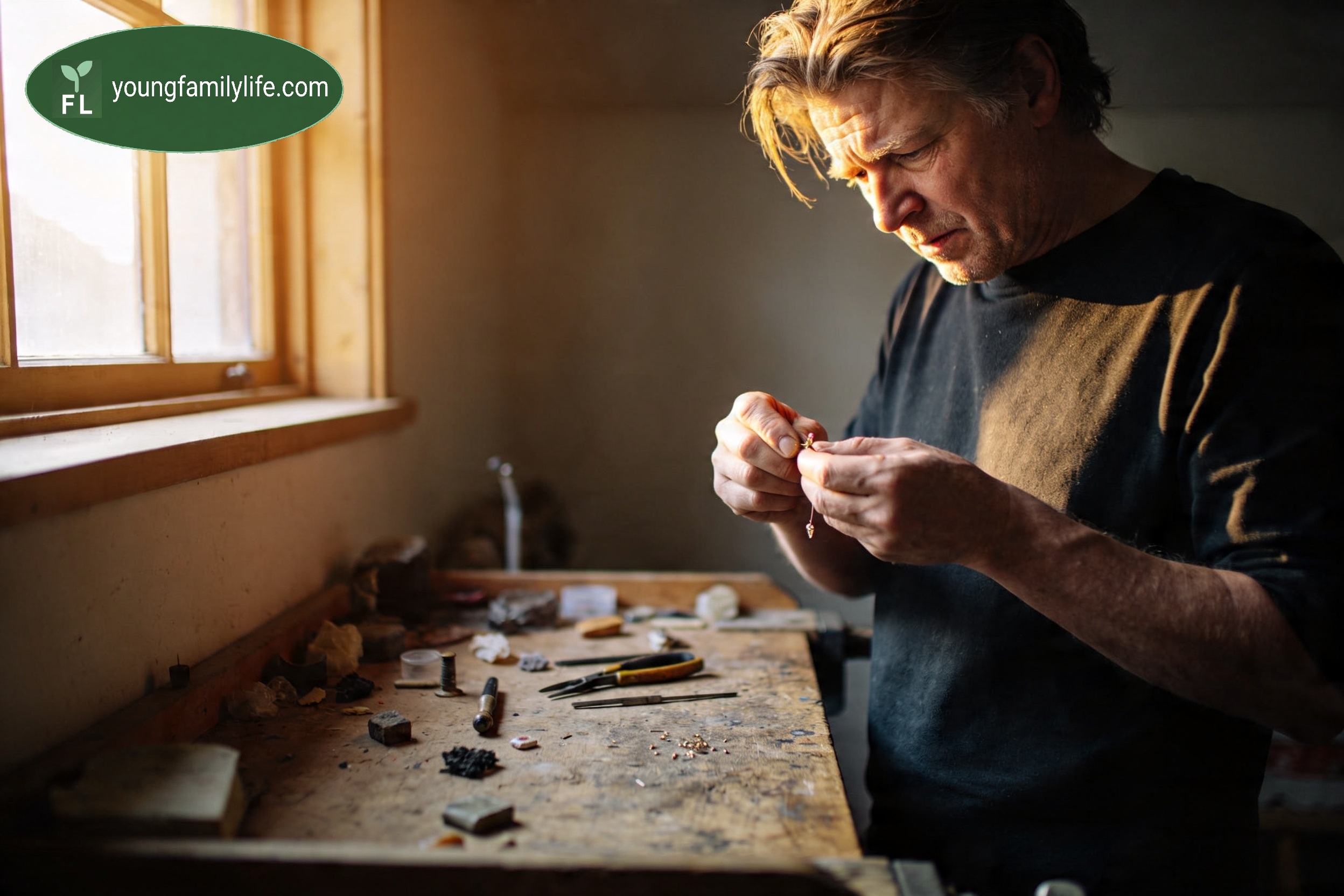
A holiday that wasn't quite a holiday
The booking was sold as a suggestion. A few days away, a chance to switch off, see something new. What arrived in the post was an itinerary. Not a brutal one — there was wiggle room, in the sense that the order of stops could be argued about. But the stops themselves were not up for debate. The heritage railway on day one. The transport museum on day two, timed around a specific steam engine that ran at half two. A detour on day three to a station that was, apparently, worth seeing. And the drive home on day four that went slightly the wrong way past a stretch of old track that someone had walked as a kid.
Anyone who has been on that holiday — or who has planned it — will know exactly what this is about. It is not really a holiday. It is a passion wearing a holiday's clothes. And most people who have a passion like that have never stopped to wonder where it actually came from.
It turns out the answer might go back a lot further than anyone would expect. In some cases, right back to before the person could walk.
What small children are actually doing when they play
Researchers who study young children have known for a long time that the odd, repetitive things toddlers do are not random. When a small child lines up every toy vehicle on a shelf in the exact same order every day, or fills a cup with sand and tips it out fifty times in a row, or spends a whole week wrapping every small object they can find in something — they are not being strange. They are not bored. They are not even messing about.
They are working. They are trying to figure out how things work. And the way young brains do that is by doing the same thing over and over until they understand it. Researchers call these patterns play schemas. Each one is a different question the child is asking about the world. How do things move? What happens when things are mixed together? What does it mean for something to be inside something else? What happens if something is hidden?
A researcher called Chris Athey spent years in the 1970s watching children play and writing down exactly what they did. What she found was that these patterns were not quirks or phases — they were how children's minds actually build themselves. The child who keeps throwing things across the room is not trying to cause trouble. They are running experiments on gravity and speed. The child who cannot stop spinning things is not distracted. They are getting to grips with how circular movement works. The repetition is not the problem. The repetition is the point.
So what happens to it when the child grows up
Here is where it gets interesting.
The usual assumption is that these play patterns are a toddler thing. The child does them intensely for a while, the brain moves on, and that is the end of it. And that is partly true — the most obvious schema behaviour does calm down after the early years.
But research suggests it does not actually go away. The interest just changes shape. What started as a baby obsessively lining things up becomes an adult who cannot leave a shelf in a disorganised state. What started as a toddler joining everything together with string becomes a grown-up who is brilliant at seeing how systems connect. What started as a small child who could not stop watching things roll and fall becomes someone who ends up working in engineering, or sport, or just someone who has to stop at every heritage railway they pass.
The child who was fascinated by the way things moved along tracks — following a set path, going where they were supposed to go, arriving on time — may well grow into the adult who finds genuine peace standing on a platform waiting for a steam engine. They cannot always explain why it matters so much. It just does. And the person standing next to them, wondering why they couldn't have gone to a beach instead, is not wrong to be puzzled. But there is a reason — it just goes back further than either of them probably realises.
Why it feels the way it feels
There is something specific about the way people feel when they are doing the thing that comes from their schema. It is not just enjoyment. It is something a bit harder to put into words. Absorbed. Right. Like the activity itself makes sense in a way that other things do not quite manage.
People who collect things — records, stamps, old books, model trains — often say that the real pleasure is not owning things. It is the sorting. The arranging. Finding the right place for a new piece. The collection is almost just an excuse for the organising. People who build things say the same — the finished object is fine, but the joining of the parts is where it actually lives. Cooks often say it is the moment things change — when the onion goes soft, when the sauce thickens, when separate ingredients become one thing — that they would choose to do again if they could only do one part.
What the research suggests is that this is the original schema making itself felt. It was built before the person had words for it, before they could remember it, in a time before conscious memory even starts. The adult has no idea they are doing something they were doing at two years old. They just know it feels like theirs.
Sometimes there is something almost like nostalgia in it too, though without a specific memory to point at. A warmth that does not have a source. The person sorting the kitchen cupboards on a Sunday afternoon, feeling oddly content, is probably not thinking about being a toddler lining up toy cars. But the thread is there, quietly connecting the two.
When the hobby takes over the whole plan
For most people this is all fine. The passion runs deep, the holidays are occasionally railway-shaped, the Sunday afternoon disappears into the shed or the record collection. Nobody is suffering. It is just how that person is, and the people around them have long since made peace with it.
But occasionally the passion stops being something alongside life and starts being the whole of it. Where the hobby eats into money, time, or relationships in ways that the other people involved did not sign up for. Where every holiday is the same holiday, every conversation loops back to the same subject, and the idea of doing something different is met with genuine resistance. Research on rigid adult behaviour is pretty clear that there is a difference between deep enthusiasm and the kind that crowds everything else out — including what the people who share a life with that person actually need.
Understanding where the passion came from does not make that easier. But it can change the conversation. Instead of "why can't you just be normal about this," there is a different question available — one with a more interesting answer, and a better chance of going somewhere useful.
What to do with this
The research on play schemas gives something that most explanations of adult obsessions do not — a starting point. Not a full explanation of why one specific person is mad about trains or fishing or reorganising the spice rack. But a way of thinking about it that makes it make sense. Deep passions like these do not tend to arrive from nowhere in adulthood. They grow. And sometimes they started growing before the person had any idea that was what was happening.
People who have a passion like this — the thing they always come back to, the subject that lights them up when everything else feels flat — sometimes feel a bit odd about how much it matters to them. The schema idea offers a different angle on that. It is not a character flaw. It is not an excess of personality. It is the legacy of something the brain was doing from the very start, when it was still figuring the world out.
And for the people around them — the ones who have sat through the third railway museum, who now know more than they ever wanted to about a particular subject — it might at least help to know that the person they are with is not being selfish or unimaginative. They are, in a sense, still following a thread that started before either of them can remember.
Topics: #HeyWantToKnow #PlaySchemas #AdultPassion #Hobbies #SchemaTheory #EarlyChildhoodDevelopment #ChildDevelopment #Psychology #WhyWeDoWhatWeDo #Enthusiasm #YoungFamilyLife #HWTK
Copyright Notice
© 2026 Steve Young and YoungFamilyLife Ltd. All rights reserved.
"Hey!, Want To Know" is a copyrighted content format of YoungFamilyLife Ltd.
This essay was developed collaboratively using AI assistance to research academic sources and refine content structure, while maintaining the author's original voice, insights, and "Information Without Instruction" philosophy. No part of this essay may be reproduced, distributed, or transmitted in any form or by any means, including photocopying, recording, or other electronic or mechanical methods, without the prior written permission of the copyright holders, except in the case of brief quotations embodied in critical reviews and certain other noncommercial uses permitted by copyright law.
For permission requests, contact: info@youngfamilylife.com