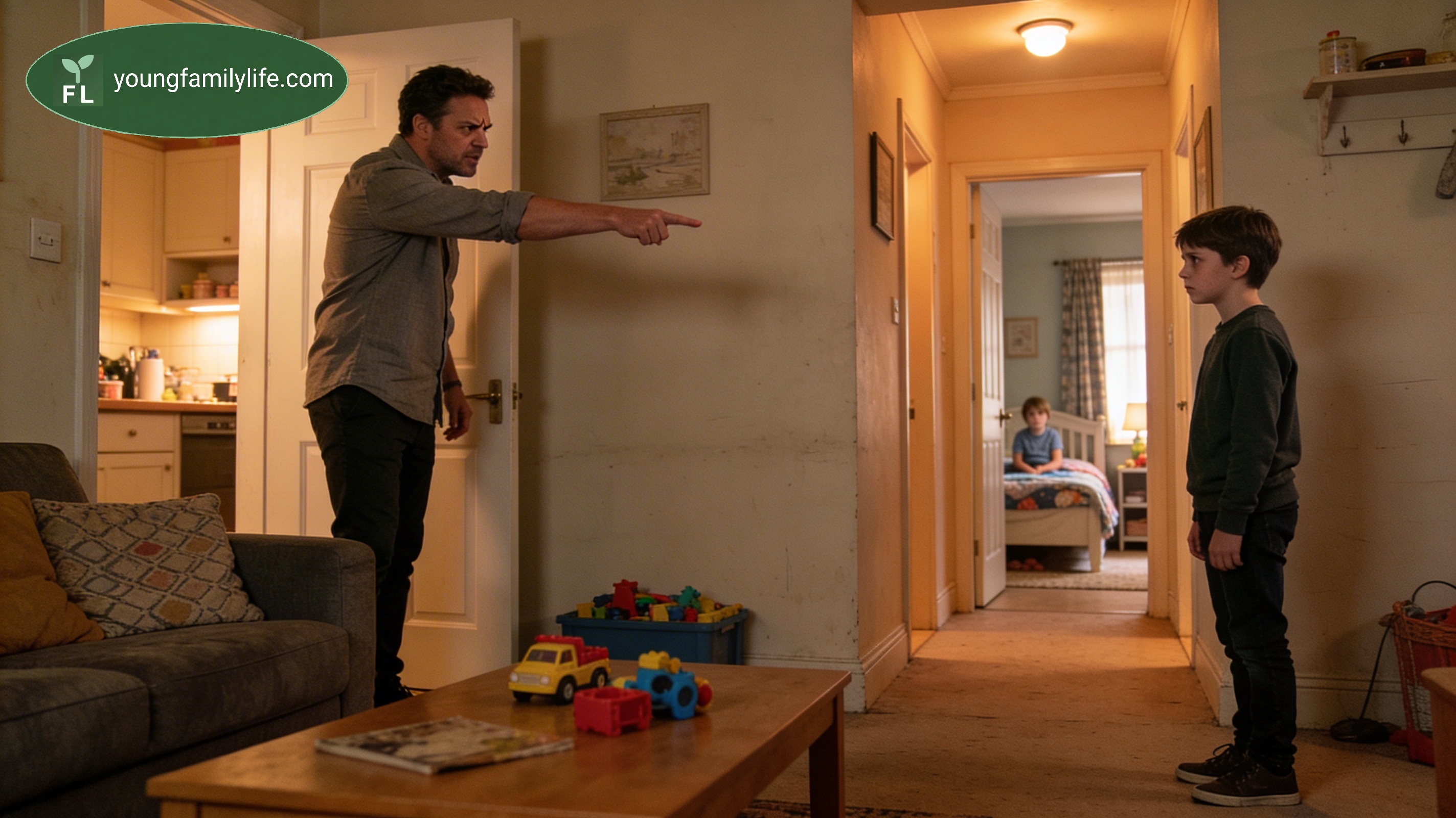
What discipline does — and what it sometimes misses
Most people have evidence that discipline works. Being sent to bed early. A phone confiscated for a week. Banned from a friend's party. Those things land hard. They're remembered. Ask most adults about a significant punishment from childhood and they can recall it clearly — the feeling of it, the unfairness or the deserved weight of it, the way it stayed with them.
And for many children, discipline does change behaviour. The rule gets followed. The behaviour stops. The household runs more smoothly.
But there's a question worth sitting with: did the behaviour change, or did the child change what they showed? Those two things can look identical from the outside. The difference is in what happened underneath — whether something genuinely shifted, or whether the child learned that certain feelings and certain parts of themselves weren't safe to bring into the open.
That's not a reason to abandon rules or consequences. It's a reason to be curious about what's actually happening when discipline works, when it doesn't, and what the child's brain might be doing in both cases.
What the brain is doing when behaviour isn't a choice
Most discipline assumes the child made a choice. They decided to hit, to refuse, to shout, to ignore what was said. The consequence is meant to make them choose differently next time.
That works when the behaviour really is a choice — when the child is calm and their thinking brain is in charge. The thinking brain is the part that understands cause and effect, that can weigh up what might happen next, that responds to reason. Consequences get through to it. They can make a difference.
But a lot of the behaviour that parents describe as "nothing works" isn't coming from that part of the brain at all.
When a child feels threatened — and the brain's idea of "threatened" includes feeling embarrassed, overwhelmed, scared of getting it wrong, or treated unfairly — an older, faster part of the brain takes over. This is the survival brain. It doesn't think about consequences. It doesn't stop to reason. It just acts — in whatever way it has learned gets the person through. And then consequences arrive aimed at a brain that was barely in the room when the behaviour happened.
The child isn't being clever or immune to discipline. Their brain was doing what brains do. The discipline missed because it was aimed at the wrong thing. YoungFamilyLife's essay Learning to Survive covers how this works in much more depth.
Why it keeps happening
Even when discipline does get through — even when the child is calm enough to take it in — behaviour that is doing a job tends to keep coming back until that job gets done another way.
Behaviour isn't random. It grew because it worked, or because it was the only way a child had to manage something that felt too big. Shouting might have got a need met. Refusing might have felt like the only thing the child actually had control over. Hitting might have been the only way to express something that words couldn't carry.
Research by Edward Deci and Richard Ryan found that pressure from the outside — consequences, rules, punishments — tends to stop the behaviour while someone is watching. When the pressure goes, the behaviour comes back. What changes things more reliably is something underneath: the need getting met a different way, the child slowly building the ability to handle the situation differently, or the thing that was overwhelming becoming less overwhelming.
None of that is discipline in the usual sense. It's slower. It's also more likely to last. The Changing People series on this platform goes into this fully.
The ride outside the supermarket
Here's a scene that might be familiar.
A parent is out with their toddler and they pass one of those coin-operated rides outside a supermarket — a little car or a rocking horse. On a whim, they decide to give it a go. The child is unsure, maybe a little nervous, but with some encouragement and a parent's hand nearby they cling on and just about enjoy it. The parent is beaming. There are photos. Hugs. Lots of praise. A big moment for both of them.
The next time they pass a ride — that one, or another one somewhere else — the child wants to go on it. Badly.
It looks like the child wants the ride. But what the child almost certainly wants more is everything that came with the ride the first time. The smiles. The encouragement. The parent's full attention and delight. That was the real thing. The ride was just where it happened.
The second time, even if the child gets on, the parent's reaction is quieter. They've seen it before. Or there isn't time, or no coin, or a reason it can't happen at all. The child's brain, which registered the first ride as something closer to I was seen, celebrated, and completely connected to the person I love most, now gets something much smaller back. Or nothing.
The child can't put any of that into words. What comes out instead might be a meltdown. A refusal to walk away. A tantrum that seems completely out of proportion to a toy ride.
This is the survival brain doing its job. It isn't reacting to danger in the way we usually think of it. It's reacting to the loss of something it needed — closeness, warmth, being the most important thing in the world for that moment. To a young child's brain, that loss can feel surprisingly close to threat.
The real work for the child, over time, is building a felt sense — not just an understanding, but an actual feeling — that not getting what they want isn't the same as being rejected. That the parent's love isn't conditional on the ride happening, or on anything else. That's not something a consequence can teach. It grows slowly, through hundreds of ordinary moments where the child reaches for connection and finds it still there, even when the answer was no.
And for the parent, discipline in that moment is unlikely to help. Not because rules don't matter — they do — but because the behaviour isn't really about the ride.
It's worth saying that this doesn't stop when childhood ends. Most adults have experienced visiting their own parents and noticing — with a mixture of amusement and mild horror — that something shifts the moment they walk through the door. The comment about their hair. And suddenly they can hear themselves responding like a teenager, slightly prickly, slightly defensive, wondering how this keeps happening to them. They'll tell their friends about it afterwards, half laughing: I don't know why I do it. I'm forty-two. The moment she mentioned my hair I was straight back to being fifteen.
The comment itself was probably genuine — a mother noticing her child looks well, meaning it warmly. But twenty years ago, that same subject — hair, its state, whether it had been brushed — was a regular source of arguments, frustration, and the particular shame that comes from a parent's repeated disapproval. The survival brain filed all of that away. It doesn't stop to check whether this time the comment is kind. It just recognises the pattern and fires.
The adult isn't being irrational. They're experiencing something real. The survival brain has a long memory — far longer than the conscious one. Which is exactly why those patterns in children, when they're still forming, deserve to be understood rather than just disciplined.
When bad behaviour is actually a question
There's a third pattern worth knowing about. Some behaviour that looks like defiance — the testing, the pushing, the refusal to let anything land — is a child asking a question they can't put into words: will you still be here if I'm at my worst?
Research by John Bowlby and the attachment scientists who came after him found that children need to know whether the people who care for them will stay steady when things get hard. For some children — especially those who have had a rough time, experienced loss, or felt like love had conditions on it — the only way to find out is to make caring for them genuinely difficult. They're not doing it on purpose. But the behaviour is testing the relationship.
When discipline arrives in that moment, it can accidentally confirm the very thing the child is most afraid of: that being cared for only happens when they're easy to care for.
What that child needs isn't a better consequence. They need to see, over and over, that the relationship holds. The Circle of Security framework, covered in the IOW piece A Parent's Introduction to Circle of Security, puts it simply: a child doesn't need a perfect parent. They need one who comes back.
This isn't saying consequences don't matter
None of this means that rules don't matter, or that behaviour should just be left alone. Having clear, consistent boundaries is part of what makes children feel safe. It's a way of showing that someone is paying attention and keeping things steady.
There's one area the research is clear on: punishment that uses aggression — of any kind — doesn't work the way people hope it does. Smacking, hitting, or anything that causes physical pain tends to get a child to stop — but through fear, not understanding. And fear doesn't teach a child how to behave better. It just teaches them to be more careful about getting caught. The same is true for non-physical aggression: shouting in a child's face, threatening, deliberately humiliating or shaming, repeated teasing as a punishment — none of it leaves a visible mark, but the research puts it in the same category. It lands hard, and it doesn't build anything useful.
That's different from saying children's lives are — or should be — free of all aggression. Siblings scrap. Children tease each other, play rough, sometimes bully or get bullied, prank their friends and get pranked back. Most children find themselves on both sides of that at some point. Learning to navigate it — with adults nearby who can help them make sense of it — is actually part of how children develop resilience and learn to handle conflict. That kind of friction is part of growing up. What the research distinguishes it from is an adult deliberately using aggression as a tool to punish a child. One is life. The other gets in the way of the very things discipline is trying to build.
What the research is more specific about is this: consequences work best when the child is calm enough to take them in. Behaviour that comes from feeling overwhelmed needs the overwhelm to reduce first. Behaviour that's meeting a need won't stop until that need is met another way.
Things shift when the conditions change, or when the child slowly develops the ability to handle those conditions differently. That takes longer than a reward chart. It tends to work better too.
What this leaves parents with
Discipline doesn't work when it treats behaviour as a choice, and the behaviour is actually the brain reacting. It doesn't work when the pressure is external, and what's needed is something internal to develop. And it doesn't work when the child's real need — for safety, for calm, for a relationship that doesn't give up on them — isn't being reached.
That's not the parent's fault. It's the gap between the way most people were taught to think about discipline, and what the research actually shows about children's behaviour and how the brain works.
Knowing the difference doesn't tell anyone exactly what to do. But it changes the questions worth asking — about what might be behind the behaviour, about what the child's brain might need in that moment, and about what the relationship is being asked to do. Those questions tend to get further than the ones discipline alone starts with.
Topics: #InOtherWords #Discipline #ChildBehaviour #Parenting #BrainDevelopment #Attachment #ChildDevelopment #ParentingScience #FamilyLife #YoungFamilyLife
Related YFL Content
A Parent's Introduction to Circle of Security — the attachment research that explains why some difficult behaviour is really a child asking whether the relationship will hold.
IOW: Attachment Styles — how the patterns children develop early shape the way they handle relationships and big feelings later on.
Hey!, Want To Know: Why Caring Parents Get Short Tempered With Their Children — the same brain science, seen from the parent's side.
Hey!, Want To Know: Why Does My Toddler Have a Meltdown When I Say No? — what's happening in a young child's brain when they completely fall apart over the word no.
Copyright Notice
© 2026 Steve Young and YoungFamilyLife Ltd. All rights reserved.
"In Other Words" is a copyrighted content format of YoungFamilyLife Ltd.
The information in this piece is based on established research and theory. Full academic sources, references, and evidential detail are available in the linked YoungFamilyLife essays.
This essay was developed collaboratively using AI assistance to research academic sources and refine content structure, while maintaining the author's original voice, insights, and "Information Without Instruction" philosophy. No part of this essay may be reproduced, distributed, or transmitted in any form or by any means, including photocopying, recording, or other electronic or mechanical methods, without the prior written permission of the copyright holders, except in the case of brief quotations embodied in critical reviews and certain other noncommercial uses permitted by copyright law.
For permission requests, contact: info@youngfamilylife.com