A Question That Doesn't Have an Obvious Answer
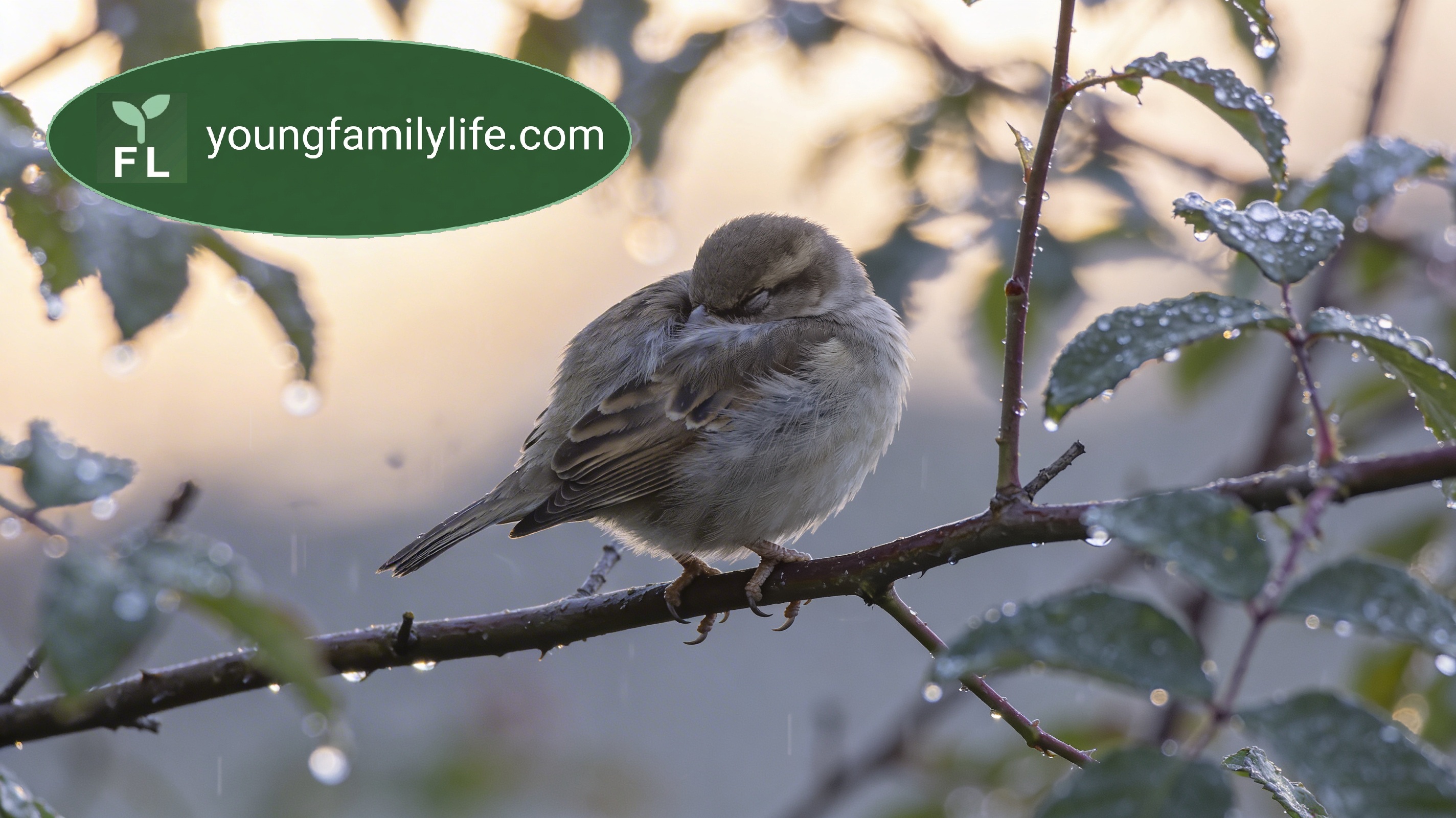
Think about what sleep actually involves. An animal goes quiet, loses awareness of its surroundings, can't respond quickly to threats, and stays that way for hours. A lion sleeping on the savannah. A bird roosting on a branch. A human flat out in bed. All of them, for a big chunk of every day, completely off their guard.
That's a strange thing for evolution to have kept. Natural selection is brutal about anything that reduces an animal's chances of survival. If sleeping made animals significantly more likely to be eaten, starve, or miss a mating opportunity, it would have been selected out long ago. But it wasn't. Every species that's been looked at sleeps — or does something so close to sleep that the difference barely matters. It's universal. So there must be a very good reason.
The question is what that reason actually is. And the answer that sleep researchers have been converging on over the last couple of decades is not the obvious one.
The Obvious Answer — and Why It's Not Quite Right
The obvious answer is that sleep is for recovery. The body repairs itself overnight. The brain clears out waste. Memories get consolidated. Hormones get released. All of that is real — those things genuinely happen during sleep. But here's the problem with making restoration the main explanation: it doesn't actually answer the question.
If the body needs to repair itself, why does it need to become unconscious to do it? Plenty of biological maintenance happens continuously, without the animal needing to switch off. The liver doesn't stop working when an animal is awake. The immune system doesn't wait for lights out. Why would some repair processes specifically require unconsciousness and vulnerability?
The restoration account describes what happens during sleep. It doesn't explain why sleep — as a state of complete withdrawal from the environment — exists in the first place. That's a different question, and it needs a different answer.
The Real Answer: Saving Energy
Jerome Siegel, a researcher at the University of California, Los Angeles, published a paper in 2009 that cut through to the core of it (Siegel, 2009). His argument: sleep is fundamentally about saving energy. When there's nothing useful to be gained from being active — no food available, no mates to find, no threats requiring a response — the most efficient thing an animal can do is shut down as much of its energy use as possible and wait.
During sleep, body temperature drops a little. Heart rate slows. Breathing slows. Digestion reduces. The whole system ticks over on a reduced budget. For an animal that might need to go hours or days between meals, those savings can be the difference between surviving and not.
Sleep, on this account, isn't the body taking time out to do maintenance. It's the body making a calculated decision: right now, the cost of being fully active is greater than any benefit being active would bring. So it stands down. It waits. It preserves its reserves for when being awake actually pays off.
That reframes the whole picture. Sleep isn't the body being switched off. It's the body being strategically sensible.
What Different Animals Show Us
Once sleep is understood as an energy-saving strategy rather than a fixed biological requirement, the enormous variety in how different animals sleep suddenly makes sense.
Wild African elephants sleep for roughly two hours a day (Gravett et al., 2017). They have vast distances to cover to find food and water, they need to stay alert to predators, and their size means the cost of lying down and getting up is significant. Two hours is what their situation allows. Put the same animals in a zoo — food provided, no predators, no distances — and they sleep considerably more. Nothing about the biology changed. The situation changed.
Great frigatebirds have been tracked during non-stop ocean crossings lasting up to ten days. During those flights, they sleep for an average of around forty minutes a day — sometimes using both sides of the brain at once, sometimes just one side while the other stays alert (Rattenborg et al., 2016). Forty minutes. For ten days. And they arrive in working order. The body took what it could, when it could, in the form that the situation allowed.
Bottlenose dolphins can't afford to lose consciousness in water — they'd stop breathing. So they sleep with one half of the brain at a time, the other half keeping them swimming and surfacing (Lyamin et al., 2008). Same principle, completely different architecture. The body found the shape of sleep that fits a mammal living in the ocean.
Mallard ducks roosting at the exposed edge of a group sleep with one eye open — literally. The hemisphere connected to the outward-facing eye stays awake, monitoring the surroundings. Ducks in the safer middle of the group use both hemispheres (Rattenborg et al., 1999). The system adjusts to the level of threat in real time.
None of these animals are following a rule about eight hours. They're all doing the same thing: taking the most energy-efficient posture available given what their environment actually needs from them.
And Then There's the Brain
There's one more piece of the picture that's worth knowing about, because it shows sleep doing something that goes well beyond just saving energy.
The brain generates waste as it works — metabolic byproducts that build up during waking hours. Researchers discovered relatively recently that the brain has its own dedicated waste-clearance system, called the glymphatic system, which clears this waste out significantly more efficiently during sleep than during wakefulness (Xie et al., 2013). The channels that carry the cleaning fluid through the brain actually expand during sleep, allowing a much bigger flow.
So sleep isn't just the body going quiet to save energy. It's also the brain running a cleaning cycle that it can't run properly while it's busy being conscious. Which explains why even animals that can get by on very little sleep — like the frigatebird on its ten-day crossing — don't seem to be able to do without it entirely. The energy-saving logic allows the quantity and shape of sleep to vary hugely. But the need for at least some sleep, it seems, is non-negotiable.
What This Means for How We Think About Sleep
The energy-saving account of sleep has a direct implication for how human sleep is understood. If sleep is a flexible strategy that different animals express in wildly different ways depending on what their situation needs, then the idea that there's one fixed correct form — eight hours, overnight, consolidated, every night — starts to look much less like a biological law and much more like a cultural preference dressed up as one.
Wild elephants are not sleeping wrong because they only manage two hours. Frigatebirds are not sleep-deprived on forty minutes a night. They are living in bodies that are doing exactly what those bodies need to do in those situations. The same basic principle applies to humans. The variation in how people sleep — across ages, circumstances, cultures, and life stages — isn't mostly failure. It's mostly the system working.
Sleep matters. The cleaning cycle matters, the restoration matters, the brain processes that happen during it matter. But the specific shape that sleep takes is far more negotiable than the anxiety industry tends to suggest. Evolution had hundreds of millions of years to figure this out. The answer it arrived at was: be flexible.
Topics: #sleepbiology #whyanimalsleep #adaptiveinactivity #sleepscience #elephantsleep #frigatebird #dolphinsleep #mallard #glymphatic #Siegel #HeyWantToKnow #YoungFamilyLife #informationwithoutinstruction #evolutionarybiology #sleepflexibility
Further Reading
These links dig deeper into the topics covered here:
The biology of sleep:
- Sleep viewed as a state of adaptive inactivity — Siegel (2009), Nature Reviews Neuroscience — The research paper behind the energy-saving account of sleep. The foundational argument for why sleep exists, rather than just what it does.
- Sleep drives metabolite clearance from the adult brain — Xie et al. (2013), Science — The glymphatic system research: how the brain clears waste during sleep, and why that process is more efficient at night than during waking hours.
Animal sleep evidence:
- Evidence that birds sleep in mid-flight — Rattenborg et al. (2016), Nature Communications — The frigatebird study: how a large seabird manages on around forty minutes of sleep a day during ten-day ocean crossings, and what that tells us about sleep flexibility.
- Inactivity/sleep in two wild free-roaming African elephant matriarchs — Gravett et al. (2017), PLOS ONE — Wild elephants sleeping for around two hours a day: the study that set the record for the shortest sleep duration recorded in any land mammal.
How This Essay Reflects YFL Values
This piece asks a question that most people haven't thought to ask — why does sleep exist at all? — and follows the evidence to an answer that changes the way the whole subject looks. The energy-saving account isn't a fringe idea. It comes from peer-reviewed sleep research, and it's been building for decades. It just doesn't feature much in the public conversation about sleep, which tends to stay firmly in the territory of what sleep does rather than why it's there.
YoungFamilyLife puts the evidence out there and leaves what to make of it entirely to the reader. What people do with this information is their own call.
Informed people make better decisions for themselves and their families. That is the only assumption this platform makes.
Related YFL Essays and Resources
Sleep as Biology — The full essay behind this piece: the energy-saving argument in depth, the complete animal evidence, the growth hormone research, and what all of it means for understanding human sleep variation.
Sleep Across the Spectrum — The companion essay taking the argument further: from daily torpor in hummingbirds to the lungfish that sleeps for years, exploring how sleep, torpor, hibernation and suspended animation are all expressions of the same underlying principle.
Why Babies Don't Sleep Through the Night — and Why That's Not a Problem — The energy-saving argument applied to the question parents actually search for: why babies wake frequently, and why that's the biology doing its job.
Why the Harvest Moon Was a Hard Day's Night — The historical companion: how pre-industrial farming communities worked through moonlit nights every harvest, and what that tells us about the flexibility of the same system described in this piece.
Copyright Notice
© 2026 Steve Young and YoungFamilyLife Ltd. All rights reserved.
"Hey!, Want To Know" is a copyrighted content format of YoungFamilyLife Ltd.
This essay was developed collaboratively using AI assistance to research academic sources and refine content structure, while maintaining the author's original voice, insights, and "Information Without Instruction" philosophy. No part of this essay may be reproduced, distributed, or transmitted in any form or by any means, including photocopying, recording, or other electronic or mechanical methods, without the prior written permission of the copyright holders, except in the case of brief quotations embodied in critical reviews and certain other noncommercial uses permitted by copyright law.
For permission requests, contact: info@youngfamilylife.com