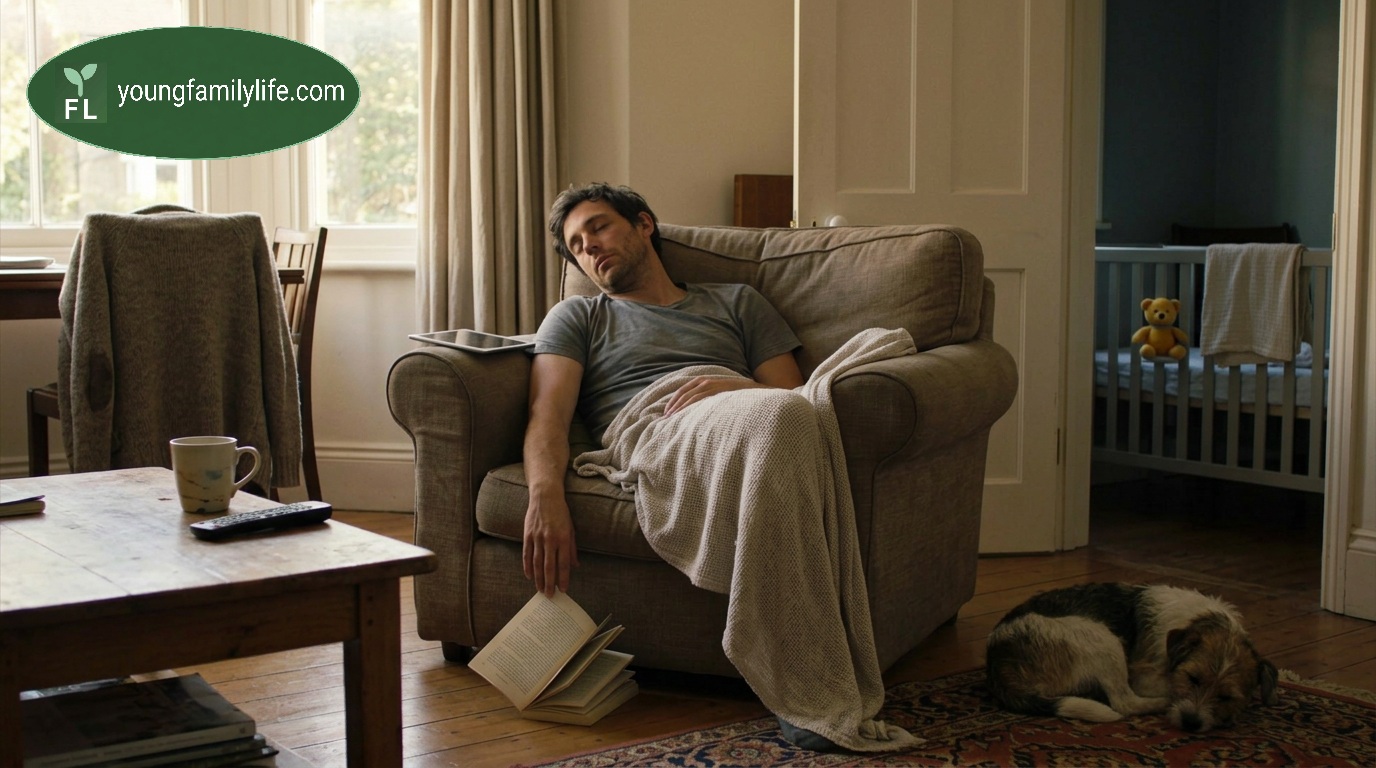
Sleep That Doesn't Follow the Rules
Most people have been told, at some point, how sleep is supposed to work. Eight hours, overnight, all in one go. Anything else is either a problem or a bad habit. Napping is laziness. Waking at 3am is insomnia. Needing more sleep when ill is the body being dramatic. Feeling tired at 2 in the afternoon is a sign something's wrong with the diet, or the coffee intake, or the screen time.
The biology tells a different story. Sleep isn't a fixed rule that every human body is supposed to follow in exactly the same way. It's a flexible system — one that adjusts how much sleep it takes, when it takes it, and what kind of sleep it gets, depending on what the body actually needs at that moment. The variation isn't a sign of failure. It's the system working.
Understanding why the body does this — and what's actually driving the changes — makes a lot of everyday sleep experiences look quite different.
What Sleep Is Actually For
People talk a lot about what sleep does — memory, immune system, brain maintenance. All real. But the more interesting question is why sleep exists at all. Why does the body shut itself off from the world on a regular basis? What's the actual logic?
A researcher called Jerome Siegel at the University of California, Los Angeles, has a good answer: saving energy (Siegel, 2009). When there's nothing useful to do — no food to find, no threat to deal with, nothing to gain from being up — the smartest thing a body can do is cut its running costs right down and wait. Breathing slows. Heart rate drops. Temperature dips a bit. The body ticks over on minimum until being awake is worth it again.
That's why sleep isn't fixed. It shifts to match what's going on. More demands on the body means different sleep. A different stage of life means different sleep. The body isn't trying to hit a target. It's responding to the actual situation.
That 2pm Slump Is Not a Coincidence
Most people know the feeling — sometime around one or two in the afternoon, the energy just goes. It doesn't matter how well the night went. The pull toward a nap is real.
It's not the lunch. It happens on an empty stomach too. It's built into the body's daily rhythm — a second dip in alertness wired into the cycle alongside the main overnight one. The siesta isn't a cultural quirk or a sign of laziness. It's a direct response to a genuine biological signal. In parts of the world where an afternoon rest is normal, people often sleep a bit less overnight and make it up with a short daytime nap. The total amount of sleep is similar. The shape of it is different (Dinges, 1992).
Research on shift workers, people in sleep labs, and populations in different cultures keeps finding the same thing: when the body is left to its own devices, it often wants to sleep in more than one go across the day. The single overnight block isn't actually the body's first choice. It's what fits around work and school and social expectation. Every afternoon, the body quietly tries to remind everyone of that.
Why the Body Sleeps More When It's Ill
When there's an infection to fight, most people feel pulled toward sleep even if they've had plenty. That's not weakness. That's the body making a call.
Immune chemicals called cytokines, which the body releases when fighting infection, directly trigger sleep — particularly the deeper kind (Dantzer et al., 2008). At the same time, keeping a fever going costs a lot of energy. Sleep cuts down everything else — movement, alertness, normal daily activity — and frees those resources up for the immune system to use. The body is making a trade: less going on outside, more going on inside.
The sleepiness of illness isn't a side effect of feeling rough. It's part of the response. The body has been doing this since long before antibiotics or paracetamol — the pull toward rest when ill is one of the oldest features of mammalian biology.
That's also why sick sleep feels different. Heavier, more vivid, harder to shake. The body isn't just resting. It's redirecting resources, and it's pulling them from the same systems that normally make sleep feel light and easy to come out of.
Sleep After a Big Physical Day
After a long physical day — hard manual work, a long run, a day on your feet — the sleep that follows is noticeably different. The proportion of deep slow-wave sleep goes up (Horne and Staff, 1983). The body isn't just tired. It's allocating more of the night to the specific kind of sleep that deals with physical recovery — muscles, energy stores, growth hormone — and less to the lighter stages.
Same flexible system, different demand. The body works out what it needs to do and adjusts the mix of sleep accordingly. The total hours might not change that much. What changes is what's going on inside them.
The flip side is just as telling. After days of not doing much — stuck at a desk, not moving much, low physical demand — the deep sleep drive drops. There's less physical recovery to do. Sleep can start to feel lighter, more broken, less satisfying. Not because something is wrong, but because the thing that usually fills that deep sleep slot isn't needed.
Sleep at Different Ages Looks Completely Different — and That's Fine
The most obvious version of the body adjusting sleep to what it needs is just watching it change across a lifetime.
Newborns sleep sixteen hours or more, scattered across the full day and night. Teenagers are biologically wired to fall asleep later and wake up later — it's not laziness, it's a genuine shift in the body's internal clock that happens during adolescence (Crowley et al., 2018). Older adults often sleep lighter, wake earlier, and find themselves up in the night more. All of this is the system doing what that stage of life requires, not breaking down.
Newborns are building a brain at a rate that'll never happen again. A big chunk of their sleep is the active, dreamy kind that researchers connect to neural development — the brain furiously making new connections (Graven and Browne, 2008). Teenagers are in the middle of a major rewiring of the brain that happens during adolescence — the late sleep timing seems to go with that. Older adults have different energy demands and different recovery needs, and the sleep shifts accordingly.
The problem comes from expecting every stage of life to sleep like a healthy adult in their thirties. That generates a lot of worry that the biology doesn't warrant. The body isn't getting sleep wrong at any of these stages. It's getting it right for that moment.
When Changes in Sleep Are Worth Noticing
Sleep flexibility is normal, and most variation in how sleep feels or looks from night to night — or week to week — is the system responding to ordinary changes in what the body is doing. That said, some changes in sleep are worth paying attention to, not because variation is dangerous but because certain patterns can be signals worth following up.
Persistent difficulty getting to sleep or staying asleep over several weeks, without any obvious cause like illness, stress, or a change in circumstances, is worth mentioning to a GP — not because it's necessarily serious, but because there are well-understood reasons it can happen and straightforward things that often help. Similarly, regularly waking feeling unrefreshed despite a reasonable amount of sleep, or finding that daytime sleepiness is affecting the ability to function safely — particularly when driving or operating machinery — is worth raising.
For parents of young babies, the relevant question is rarely whether the baby's sleep looks unusual. As the companion pieces in this series explore, the range of normal in infant sleep is far wider than most parenting guidance implies. The more useful question is whether the overall situation — including how the adults in the household are coping — is manageable. The body's flexibility is considerable. But it isn't unlimited, and support when it's needed is part of the picture too.
Topics: #sleepbiology #sleepflexibility #polyphasicsleep #afternoopdip #siesta #sleepandillness #sleepacrosslifetime #infantsleep #teensleep #HeyWantToKnow #YoungFamilyLife #informationwithoutinstruction #sleepscience #adaptiveinactivity
Further Reading
These links dig deeper into the topics covered here:
The biology of sleep:
- Sleep viewed as a state of adaptive inactivity — Siegel (2009), Nature Reviews Neuroscience — The research paper behind the energy-saving account of sleep: what the body is actually doing when it sleeps, and why the system is built to be flexible.
- Sleep and brain development — Graven and Browne (2008), Newborn and Infant Nursing Reviews — Research on the role of active sleep in early brain development, and why infant sleep looks so different from adult sleep.
Sleep across the lifespan:
- Circadian phase delay in adolescents — Crowley et al. (2018), Sleep Medicine Clinics — The research behind the teenage sleep shift: why adolescents are biologically wired to sleep later, and what that means for their daily functioning.
- BASIS — Baby Sleep Information Source — Helen Ball's Durham University resource on normal infant sleep, including the wide range of what's biologically typical across the first years of life.
How This Essay Reflects YFL Values
This piece uses research from sleep biology, developmental science, and immunology to explain why sleep looks different at different times — rather than treating any departure from a fixed pattern as a problem. The afternoon dip, the heavy sleep of illness, the deep sleep after exercise, the fragmented nights of early parenthood — these are all expressions of the same flexible system doing its job.
YoungFamilyLife presents evidence and leaves what to do with it to the reader. This piece doesn't suggest how anyone should organise their sleep or what they should change. What people make of the information here is entirely their own decision.
Informed people make better decisions for themselves and their families. That is the only assumption this platform makes.
Related YFL Essays and Resources
Sleep as Biology — The full essay behind this piece: the energy-saving argument in depth, the animal evidence, the growth hormone research, and what the biology of sleep means for how human variation is understood.
Why Babies Don't Sleep Through the Night — and Why That's Not a Problem — The companion piece on infant sleep: why babies wake frequently, what the biology behind it is, and why the expectation that they shouldn't is more cultural than biological.
Why Exhausted Parents Are Adapting, Not Failing — The piece on parental sleep disruption: why the exhaustion of early parenthood is real but the anxiety layered on top of it is largely manufactured, and what the research actually shows.
Sleep as Culture — The essay on where the eight-hour overnight norm came from, why it's a more recent idea than it seems, and how the sleep anxiety industry built itself around a standard that was never really about biology.
Copyright Notice
© 2026 Steve Young and YoungFamilyLife Ltd. All rights reserved.
"Hey!, Want To Know" is a copyrighted content format of YoungFamilyLife Ltd.
This essay was developed collaboratively using AI assistance to research academic sources and refine content structure, while maintaining the author's original voice, insights, and "Information Without Instruction" philosophy. No part of this essay may be reproduced, distributed, or transmitted in any form or by any means, including photocopying, recording, or other electronic or mechanical methods, without the prior written permission of the copyright holders, except in the case of brief quotations embodied in critical reviews and certain other noncommercial uses permitted by copyright law.
For permission requests, contact: info@youngfamilylife.com