Opening
There is a particular kind of sting in being ignored by a child one loves. Or being ignored by anyone.
Being seen — registered, acknowledged, held in another's awareness — is one of the most fundamental of human needs. Developmental science has documented it from the earliest days of life: the infant who is met with a still, expressionless face when they reach toward a carer's gaze withdraws, protests, and — if the absence of response persists — begins to disengage (Tronick et al., 1978). What the infant demonstrates so visibly, the adult continues to carry. The need to matter to the people who matter to us does not diminish with age; it simply becomes less openly displayed.
When a child — particularly one's own — appears indifferent to an adult's presence, that ancient need is activated. The experience is real and the discomfort is proportionate to how much the relationship means. Understanding where that experience comes from, and what it may or may not be telling its bearer about the child, is what this essay sets out to explore.
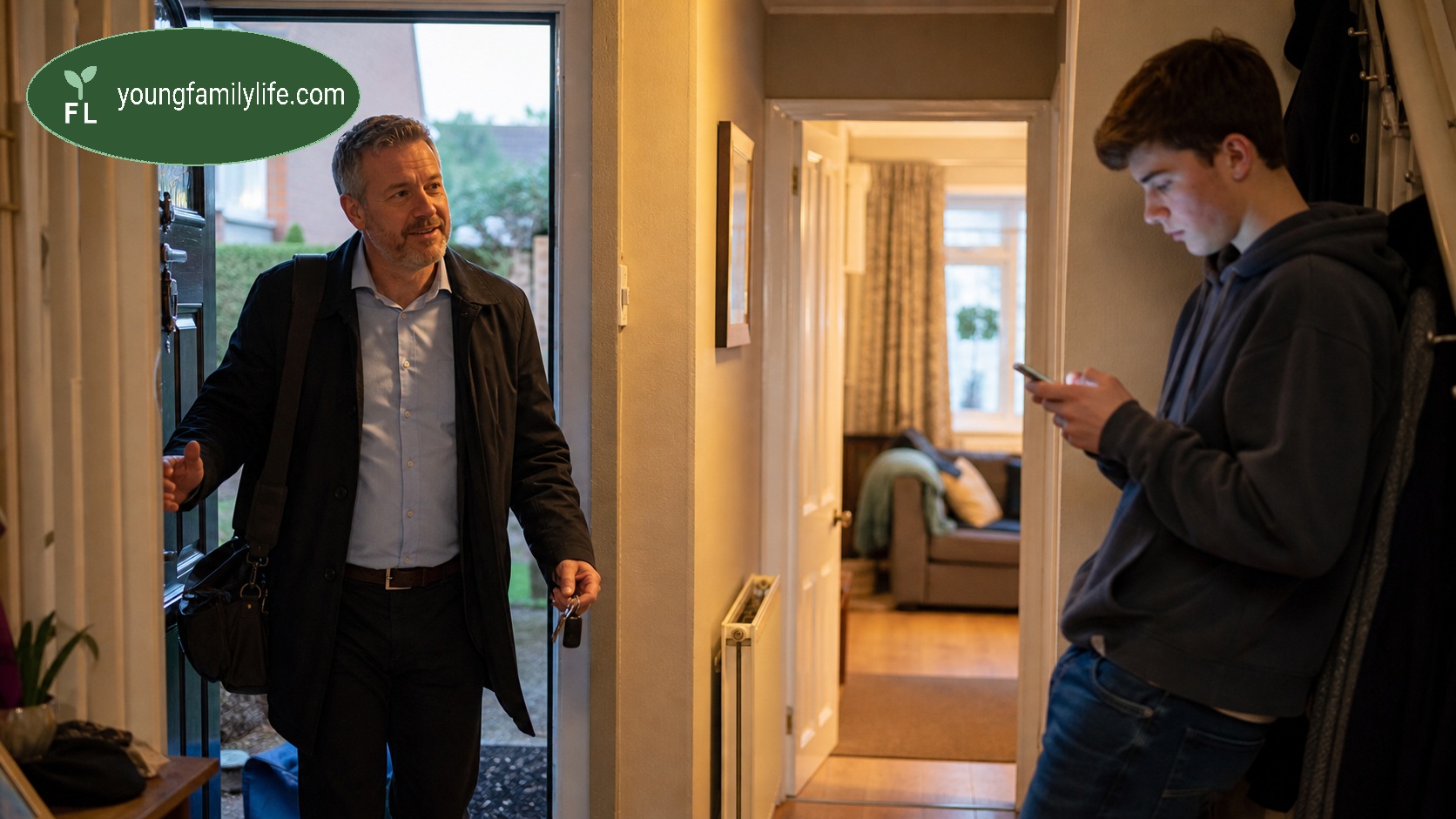
A parent returns home after a day away — work, errands, appointments, the ordinary machinery of adult life — and calls out. Nothing comes back. No running feet, no upturned face. The child they have been thinking about all day is absorbed in something else entirely: a screen, a toy, a drawing. The return is registered with approximately the interest that might be shown to a passing van.
The feeling this produces is worth paying attention to. Not because the child is necessarily doing anything that requires attention, but because the feeling itself is information — and what it is information about may be quite different from what it appears to be.
Something similar is sometimes observed by practitioners: a child who, in a home visit or family session, shows little apparent awareness of or interest in a parent in the room. For grandparents, foster carers, or others in a caring role, the same dynamic can surface — a child who seems not to register the adult's presence, warmth, or return.
This essay looks at that experience from several directions. It considers what the science of child development, attachment theory, and neurodevelopment actually shows about this kind of behaviour — and then turns the lens, equally carefully, toward the adult on the receiving end of it.
Part One: What the Research Shows About Children and Reunion
The question parents ask
Why does my child ignore me when I get home? is one of the more common distress signals that surface in family support work. It is phrased as a question about the child. The implicit concern, however, is often about the relationship.
Parents sometimes wonder whether their child is signalling unhappiness, disengagement, or preference for the other parent or carer. The Google search is usually driven by a combination of puzzlement and low-grade hurt. The question deserves a careful answer — and the answer, as is so often the case in developmental science, is that the observable behaviour and its meaning are not the same thing.
Developmental attention and the absorbing task
The first thing the research points to is something relatively straightforward: the capacity to shift attention is itself a developmental achievement, and for much of childhood it is incomplete.
Young children — particularly those under seven or eight — operate what developmental psychologists call attentional inertia: the tendency for sustained attention to become progressively more resistant to interruption the longer it has been held (Anderson et al., 1987; Richards & Anderson, 2004). A child who has been engaged in meaningful play, creative activity, or even passive screen viewing for thirty or forty minutes is not choosing to ignore an arriving parent. Their nervous system is, in the most literal neurological sense, still inside the task.
This is not defiance, and it is not indifference. It is the prefrontal cortex — the seat of executive function, attention switching, and socially-directed behaviour — doing what a still-maturing prefrontal cortex does: prioritising the existing engagement over the new stimulus. The parent's arrival has registered; the child simply cannot yet interrupt their own absorption with the speed and fluency that would satisfy adult social expectations.
Jean Piaget's account of cognitive development adds a further and important layer here. In what Piaget described as the preoperational stage (approximately two to seven years), the child's thinking is characterised by egocentrism — not selfishness in any moral sense, but a genuine cognitive limitation: the inability to reliably hold another person's perspective alongside their own (Piaget & Inhelder, 1969). The preoperational child absorbed in play is not inconsiderate; they are operating within a cognitive structure that does not yet routinely include other minds as a simultaneous frame of reference. The parent's arrival is an event in the external world. It is not yet, in the way the parent experiences it, an event for someone who has been waiting, wanting, and expecting acknowledgement.
This begins to shift as the child moves into what Piaget called the concrete operational stage (roughly seven to eleven years): the capacity for decentration — holding multiple perspectives simultaneously — develops and consolidates. It is in this period that children begin to appreciate, with increasing reliability, that the returning parent is not simply an object in the room but a person with an interior life that includes expectations of them. The apparent indifference of the preoperational child and the more mediated response of the older child are not the same thing. They reflect genuinely different cognitive architectures.
The implication is worth sitting with: what looks like being ignored may be, in part, the child's cognitive and neurological development working exactly as it should. The capacity to drop a task, orient to a person, and produce a warm social greeting on demand is an executive function skill that continues developing well into adolescence (Diamond, 2013). Expecting it reliably in a seven-year-old is expecting a developmental capacity that is still being built.
Heard, but not acted upon — a different scenario
There is a related but distinct version of this experience that deserves its own consideration. A parent calls a child to dinner, or asks them to come through, and the child responds — "yeah", "coming", "okay" — and then does not come. Not immediately, not after a minute, not until the third or fourth call. The child heard. The child acknowledged. And the child remained exactly where they were.
This is experienced differently by parents than the scenario above, and understandably so. Attentional inertia at least offers a ready explanation — the child was absorbed and didn't fully register the call. But a child who has responded has removed that explanation entirely. The acknowledgement is there. What is absent is the action that should follow it.
The research suggests two developmental mechanisms are typically at work here, operating simultaneously.
The first is what neuropsychologists call response inhibition — or more precisely, its inverse: the difficulty of translating an acknowledged intention into immediate action. The prefrontal cortex governs not only attention switching but the initiation of behaviour in response to an instruction. In children, this executive pathway between I know I should and I am now doing is not yet reliably wired (Zelazo & Müller, 2002). The child who says "yeah" is not necessarily buying time or being deliberately dilatory. They may have genuinely registered and assented to the instruction while the executive mechanism that would turn assent into action is simply not yet firing with adult efficiency. The gap between acknowledgement and compliance is neurological before it is motivational.
The second is time perception. Children's subjective experience of time — particularly prospective time, the felt sense of how long something will take or how soon something is — is significantly less calibrated than adults' (Droit-Volet, 2013). The parent calling "dinner's ready" is working from an adult sense of imminence: now means immediately. The child working from a child's experience of time may register "coming" as a genuine intention that belongs to a timeframe that feels much less urgent than the parent's. They are not, in their own experience, being slow. Their clock is simply running differently.
Together these two mechanisms account for much of what parents experience as the "heard and ignored" dynamic in younger and middle-childhood ages. The behaviour is real and the parental frustration is entirely understandable. But the attribution — my child is choosing not to come — sits uneasily with what the developmental evidence shows about how the child-aged brain actually processes instruction and time. In most cases, this is a brain that has not yet finished building the circuitry between hearing and doing.
School-day depletion and the regulation cycle
A second thread in the research concerns what might be called the cost of the day.
School is, for most children, an environment of sustained social performance. The classroom requires regulation: controlling impulses, managing peer interactions, attending to tasks, navigating the complex social choreography of the playground. For many children, this is genuinely effortful — and the effort is invisible to the adults observing them from outside.
Developmental psychologist Stuart Shanker, working within the framework of self-regulation theory, has described how children may appear regulated at school while the internal cost of that regulation is accumulating throughout the day (Shanker, 2016). The behaviour that looks like cooperation and compliance in the school environment is, for some children, closer to performance — maintained at some psychological cost.
When those children come home, they cross a threshold. They are, neurologically speaking, somewhere safe — or at least somewhere different. The regulatory performance can stop. What follows, as Shanker describes it, is not ignoring but decompression: a period in which the dysregulation that has been held at bay is finally permitted to surface or discharge. The child who appears withdrawn or absorbed immediately after return may simply be in the early stages of coming back to themselves.
This decompression does not always look peaceful. For some children it arrives as emotional flooding — the tearful collapse, the sudden argument over nothing, the inexplicable meltdown twenty minutes after the school run. For others it looks precisely like the withdrawal the parent notices: the absorption in a screen or a solitary game, the reduced responsiveness, the apparent absence of interest in connection.
The parent's presence — paradoxically — enables this discharge. It does not cause it. The child who holds it together at school and falls apart at home is not failing at home; they are finding home safe enough to stop holding it together. That distinction matters.
The biological logic of the safe base
This brings the research directly into attachment theory — and to a phenomenon that, once understood, reframes the ignored-at-the-door experience entirely.
John Bowlby's formulation of the secure base (Bowlby, 1988) describes the attachment figure — typically a parent — as a psychological foundation from which a child can explore, and to which they can return in times of stress or need. The secure base is not merely a location; it is a relational state. The child who has internalised a secure attachment carries the base with them — but they also need to restore it periodically through proximity to the attachment figure.
The crucial and counter-intuitive implication of this framework, developed further by Mary Ainsworth in her landmark Strange Situation studies (Ainsworth et al., 1978), is that children with secure attachment do not necessarily exhibit the most dramatic reunion behaviour. The child who rushes to the door, clings, and is inconsolable until held is demonstrating anxious attachment — a heightened vigilance about the attachment figure's availability that produces exaggerated proximity-seeking. The securely attached child, by contrast, may acknowledge return relatively briefly — then return to play.
Ainsworth's research showed that secure attachment at twelve months correlated with mothers' prior sensitivity and responsiveness, not with the drama of reunion behaviour. The securely attached infant knows the parent will be there; the anxious infant is not sure. The reunion behaviour reflects that underlying working model rather than the warmth of the relationship itself.
In developmental terms, then, a child who greets a returning parent calmly — or even with apparent indifference — before gradually reintegrating connection over the following minutes may be demonstrating something closer to secure functioning than the parent's gut reaction suggests.
Peter Fonagy and colleagues, writing within the framework of mentalization and reflective functioning, have further elaborated how internal working models shape the way children interpret and respond to caregivers' availability (Fonagy et al., 2002). The child who has reliably internalised a secure relationship does not need to demonstrate it at the door. The connection is already known. It will be available when they turn toward it.
Part Two: Age, Development, and What Changes Over Time
The reunion dynamic does not remain constant across childhood. Its character shifts with development, and understanding those shifts helps contextualise what a parent is observing.
Infancy and toddlerhood (0–3 years)
In the earliest years, the reunion response tends to be visceral and immediate. Separation from an attachment figure activates the body's stress-response system, and reunion produces corresponding physiological soothing — processes explored in detail in Part Three of this essay. The infant or young toddler is largely transparent: the distress of separation and the relief of return are written directly onto behaviour.
Piaget's concept of object permanence — the understanding that objects and people continue to exist when out of sight — is relevant here. In the earliest months, this understanding is absent or fragile: the caregiver who leaves the room has, in a cognitive sense, ceased to exist for the infant. Reunion is therefore not experienced as the restoration of something that has been held in mind; it is more akin to a fresh encounter. As object permanence consolidates through the first two years, the infant becomes capable of something closer to what adults recognise as waiting and anticipating — but this is a gradual emergence, not a switch (Piaget, 1952). The reunion behaviour of very young children cannot be read through the lens of adult expectation, because the cognitive scaffolding that would make reunion meaningful in the adult sense is still being constructed.
It is worth noting, however, that even here attachment style modulates expression. The securely attached toddler in the Strange Situation study may cry briefly at separation, then settle relatively quickly at reunion and return to play. The anxiously attached toddler continues to be distressed even after the parent returns. The avoidantly attached toddler — in a pattern that can look remarkably like indifference — may suppress the outward display of attachment need while physiological measures (heart rate, cortisol) show the underlying distress to be equal to or greater than that of the anxious child (Spangler & Grossmann, 1993).
The avoidant toddler who does not rush to the returning parent has learned something: that expressing attachment need is not reliably effective, or may even be counter-productive. The non-response is a learned strategy, not an absence of feeling.
Middle childhood (4–10 years)
As children enter the school years, the picture becomes more complex. Language, cognitive development, and peer relationships create new layers between the child's internal experience and its outward expression. The emotional transparency of the toddler gives way to something more mediated.
Piaget's concrete operational stage — the period from roughly seven to eleven years — is significant here. As decentration develops and the child becomes increasingly able to hold multiple perspectives simultaneously, they acquire a growing awareness that the returning parent is a person with expectations, feelings, and an interior experience of the reunion. This does not automatically produce the warm greeting the parent hopes for, but it does mean the child is operating with a more complete picture of the social moment than the preoperational child could access. What changes in middle childhood is not always the behaviour, but the cognitive context in which it occurs: the older child who does not look up may be making a choice, however unconscious, in a way that the four-year-old simply was not.
Middle childhood is also the developmental period in which children are actively constructing identity — working out who they are in relation to their peer group, their school environment, and their family. The parent who returns at the end of the day may, without realising it, be arriving into a child who is in the middle of a narrative that has nothing to do with the parent. The child is not absent; they are elsewhere, psychologically speaking, in a way that is developmentally appropriate.
Research on children's emotional regulation in middle childhood suggests that the capacity to modulate emotional expression — to manage how much of an internal state is visible — increases substantially between ages five and ten (Zeman et al., 2006). The child who has learned to contain their feelings at school may continue containing them for some time after return, not because they are suppressing connection, but because the habit of self-regulation has its own momentum.
Adolescence (11–18 years)
Adolescence introduces a different dynamic altogether. The developmental task of adolescence — individuation, the construction of identity separate from the family — means that the teenager's relationship to parental return is governed by processes that are explicitly about differentiation rather than connection.
The adolescent brain, reshaped by pubertal hormones and the pruning of synaptic connections, is simultaneously hyper-responsive to peer signals and relatively under-responsive to parental ones (Blakemore, 2018). This is not pathology; it is programme. The teenager who barely looks up when a parent comes home is, in a biological sense, doing exactly what their developmental stage requires. Their social reward system is calibrated to their peer world in a way that makes parental arrival — however genuinely valued — a lower-priority signal than it will later become.
Piaget's final stage — formal operations, typically emerging from around eleven or twelve years — adds a further dimension. The adolescent can now think abstractly and hypothetically, including about the relationship itself. They are capable of reasoning about how the parent will feel, what the social consequences of different responses might be, and what statement their behaviour makes to any audience present. This is what makes the public performance of indifference in adolescence qualitatively different from the preoperational child's egocentric absorption. The teenager who barely acknowledges a parent at a family gathering has, in most cases, the cognitive equipment to know exactly what they are doing. The performance is sophisticated — even if it is not consciously calculated. It is the formal operational mind in service of individuation: the assertion of a separate self, conducted in the social arena where that assertion has most visibility (Piaget & Inhelder, 1969).
This is the paradox of adolescent attachment: the relationship to parents remains deeply important at the level of secure base, but the adolescent's task is to not show how important it is. The parent who understands this — who can see the formal operational performance for what it is rather than what it feels like — can hold the relationship without requiring its constant demonstration.
Part Three: The Hormone System — What Is Actually Running the Show
The sections above have traced what is visible: the developmental stage, the attachment pattern, the cognitive capacity of the child at different ages. The adolescence section touched on the role of pubertal hormones in reshaping the brain's social priorities — but the hormone system's influence runs considerably deeper and earlier than adolescence alone. Behind all the behaviours described in Parts One and Two — and in some cases driving them in ways that are clinically significant — is a chemical system that most accounts of child behaviour leave largely unexamined.
As the YFL piece Hey!, Want To Know: How an Oak Tree Knows When to Drop Its Leaves explored, hormones are not unique to animals or to humans. They are the universal solution that living things evolved to coordinate millions of separate cells without central control. A hormone is simply a chemical messenger: made in one part of a living system, travelling to another, causing something to change. The oak tree uses ethylene to drop its leaves in autumn. The human body uses a considerably more complex toolkit to navigate the relational world of families, schools, and the daily return to home.
Cortisol: the cost of the day, chemically
Cortisol is the body's primary stress hormone — produced by the adrenal glands in response to perceived threat, released into the bloodstream, and capable of altering brain function, attention, memory, and social behaviour. Its role in the reunion dynamic described throughout this essay is central.
When a child is separated from their primary attachment figure, cortisol rises. This is well established in research with infants and young children: separation activates the hypothalamic-pituitary-adrenal (HPA) axis — the body's stress-response system — and cortisol is one of the measurable signatures of that activation (Gunnar & Donzella, 2002). In a securely attached child, the reunion with the caregiver produces what researchers call cortisol buffering: the stress hormone declines, the physiological alarm settles, and the child can return to play. The parent's return is, in a chemical sense, the resolution of a stress cycle that separation began.
The school day is, for many children, a sustained cortisol event. Six or seven hours of social performance, evaluation, peer navigation, and academic demand — all of which involve varying degrees of threat-response activation — means that a child arriving home may be carrying a significantly elevated cortisol load. The withdrawal, the absorption in a screen, the apparent indifference to the returning parent: these may be the behavioural signatures of a nervous system that is still in recovery. The decompression described in Part One in terms of Shanker's self-regulation framework has a specific hormonal correlate: the cortisol curve coming down.
For adolescents in particular, however, this picture has become significantly more complex in the era of social media. The school day no longer ends at the school gate. A teenager who appears to be sitting quietly on the sofa or who is absorbed in their phone at a family gathering may simultaneously be fully immersed in the social world of their peer group — navigating group chats, managing their social media presence, monitoring who has liked what, responding to a conflict that began at lunchtime and has continued uninterrupted into the evening. The cortisol load of the school day's social environment does not dissipate at home-time; for many teenagers, it continues with barely a pause, mediated now through a screen rather than a corridor. What looks like a teenager disengaged from the family is, in neurochemical terms, potentially still in the thick of the social threat-and-reward cycle that the school day began. The parent at the family event, or returning home to find their teenager apparently unreachable, may not be observing a child who has come home at all — in any meaningful social sense.
Oxytocin: the chemistry of being met
Oxytocin is the hormone most directly associated with bonding, trust, and social connection. Released during physical contact, warm eye contact, and moments of genuine attunement, it is sometimes referred to — somewhat reductively — as the bonding hormone. Its role in the parent-child relationship is substantial and well-documented (Feldman, 2017).
In the context of reunion, oxytocin matters in a specific way: its release is contingent on the quality of the encounter. A reunion that involves genuine warmth — physical contact, eye contact, the parent acknowledging the child's state rather than immediately demanding a response — is more likely to trigger oxytocin release in both parties than one marked by demand or disappointment. This is not a circular argument; it is a chemically grounded account of why the manner of the parent's return shapes the child's capacity to reconnect. The parent who arrives already hurt and communicates that hurt — however subtly — may inadvertently create conditions that delay the very connection they are hoping for.
Oxytocin also has a protective function in relation to cortisol. Secure attachment relationships, characterised by reliable oxytocin-releasing interactions over time, contribute to the HPA axis's capacity to regulate itself: securely attached children show more efficient cortisol recovery after stress (Gunnar & Donzella, 2002). The chemistry of the ongoing relationship shapes the chemistry of each individual reunion.
Dopamine: what is competing for the child's attention
Dopamine is the brain's primary reward and anticipation signal. It is released in response to pleasurable stimuli, but — crucially — its largest release occurs not at the moment of reward but in anticipation of it. The brain's dopamine system is, in a very direct sense, what drives motivated behaviour: the pursuit of food, social connection, achievement, novelty.
Screens — and in particular social media, games, and video content — are engineered to produce sustained dopamine release through variable reward schedules: the same mechanism that makes slot machines compelling (Schultz, 1998). The child absorbed in a game or a phone when a parent returns home is not simply distracted. Their dopamine system is in an active, sustained state of reward-seeking that the parent's arrival — however much the child loves them — is unlikely to compete with in real time.
This is not a counsel of despair, and it is not an argument for removing screens. It is simply a chemically honest account of what is happening when a child does not look up. The dopamine signal generated by a parent's return is typically less immediate, less intense, and less reliably timed than the signal generated by digital media. Understanding this shifts the question from why does my child prefer their phone to me? — which implies a comparison of affection — to what is the child's dopamine system currently calibrated to respond to? — which is a more accurate and considerably less painful framing.
Pubertal hormones: the adolescent brain reorganised
In adolescence, the hormone system undergoes its most dramatic reorganisation since infancy. Rising oestrogen and testosterone reshape the adolescent brain in ways that are now well-documented, and which speak directly to the behaviours described in Part Two.
The adolescent brain becomes significantly more sensitive to social reward and social threat — particularly from peers — as a function of pubertal hormone changes acting on dopamine and serotonin systems (Blakemore, 2018; Steinberg, 2008). This is not metaphor. The same parental presence that, in middle childhood, produced reliable warmth and orientation, now sits in a brain that is neurochemically tuned to an almost entirely different set of social signals. Peer approval activates the adolescent's reward system far more powerfully than parental approval. The risk of peer rejection activates their threat system far more acutely than any parental disappointment.
This has a direct implication for the reunion dynamic in adolescence: the returning parent is competing, chemically, with a social world that the adolescent's brain is currently wired to prioritise. The teenager who shows little visible pleasure at a parent's return is not demonstrating emotional flatness; they may be demonstrating the entirely predictable consequence of a brain temporarily reorganised around peer relationships.
When the hormone system is not functioning as it should
The foregoing describes healthy hormone functioning in the context of child development. But the picture changes significantly when the hormone system is operating under sustained stress — and this is where the essay moves from developmental reassurance to something more clinically important.
Chronic early adversity — including neglect, abuse, domestic violence, parental mental illness, or sustained household instability — is associated with dysregulation of the HPA axis: the cortisol system becomes persistently over-activated, or, in some cases of severe chronic stress, paradoxically blunted (Shonkoff et al., 2012; Gunnar & Quevedo, 2007). A child whose stress-response system has been chronically activated may present with what looks, behaviourally, like indifference: flattened emotional expression, reduced social responsiveness, apparent absence of interest in the returning parent. The appearance is of not caring. The biology is of a system that has spent so long in high alert that its signalling capacity has been compromised.
The oxytocin system can also be affected. Children who have not experienced reliable, attuned caregiving in early life may show reduced oxytocin responses to positive social contact (Gordon et al., 2008). The warm greeting that produces a biochemical moment of bonding in one child may produce little response in another — not because the child lacks the capacity for connection, but because the relational experiences that normally calibrate that system have been absent or inconsistent.
Dopamine dysregulation, increasingly documented in relation to excessive screen use, can produce a related pattern: a child whose reward system has been habituated to the high-stimulation input of digital media may show what looks like social disinterest in lower-stimulation human interaction. The parent at the door is, chemically, simply not registering as interesting relative to what came before.
These are the circumstances in which the developmental explanations offered elsewhere in this essay are insufficient on their own. A child who is persistently emotionally unavailable — not occasionally, not at particular ages, but as a consistent pattern across contexts — may be signalling something that warrants a different kind of attention than curiosity about their Piagetian stage or their attachment classification. They may be signalling a hormone system under sustained stress, and the appropriate response is not reassurance but professional curiosity.
The distinction matters: between the child who ignores a parent at the door because they are eight years old and absorbed in Lego, and the child who ignores a parent because their nervous system has been in survival mode for months. The behaviour may look the same from outside the front door. The meaning is entirely different.
Part Four: The Parent at the Door
Everything considered so far concerns the child. But the question — why does my child ignore me when I come home? — is experienced by the parent. And the parent is not a neutral observer.
This is perhaps the most important section of this essay, and the one most likely to be missed in a simple account of child development.
What a parent brings to the moment
Before considering the deeper history that shapes a parent's experience, it is worth noting that the immediate response to a child's non-compliance is itself shaped by something specific: parenting style. Research on parenting has long distinguished between two dimensions that govern how parents experience and respond to their children's behaviour — warmth, the emotional responsiveness and connection a parent offers, and control, the expectations around compliance, structure, and authority (Baumrind, 1966; Maccoby & Martin, 1983).
These dimensions shape what the same behaviour means to different parents. The "yeah-and-then-nothing" pattern — the child who acknowledges and does not come — may land primarily as defiance in a parent with strong control investment: a challenge to authority, a testing of limits, a failure of respect. In a parent whose primary investment is in warmth and connection, the same behaviour may land as something quieter and more personal: the child preferring their own activity, not caring enough to come, a small reminder that the parent is not the most important thing in their child's world at that moment.
Neither reading is necessarily accurate — but the feeling each produces is real, and shaped at least as much by what the parent brings to the moment as by what the child is doing. The same child, behaving identically, may be experienced as defiant by one parent and dismissive by another. Where the feeling is strong and consistent, it is worth asking which lens is operating — and what it is built from.
The internal working model in the adult
Attachment is not something that happens in childhood and then stops. The internal working model — the set of expectations, beliefs, and emotional patterns built in early relational experience — accompanies the person into adulthood and into parenthood. It shapes, in ways that are often outside awareness, how a parent reads and responds to their child's behaviour.
Mary Main's development of the Adult Attachment Interview (Main & Goldwyn, 1984) demonstrated that adults could be reliably classified according to the same attachment patterns identified in children, and that a parent's attachment classification was the single strongest predictor of their child's attachment security. The mechanism proposed — and subsequently supported by a substantial body of research — is that a parent's own unresolved attachment history shapes their reflective function: their capacity to perceive and interpret the mental states of their child (Fonagy et al., 1991).
Put plainly: the parent who was not reliably welcomed as a child — whose returns to their own parent were met with distraction, criticism, or indifference — may bring that history to the moment they open their own front door. The sting of being ignored by a child may have roots that predate the child entirely.
This is not a criticism of parents. It is the opposite. It is a recognition that parenting happens at the intersection of two attachment histories — the child's and the parent's own — and that the feelings activated in a parent at reunion are not always simply responses to the child's current behaviour. They may also be echoes.
What feels like rejection may be projection
The word projection, in its everyday usage, has acquired an accusatory edge that is not useful here. The clinical concept is more precise and considerably more compassionate: projection describes the way in which feelings or beliefs originating in one's own history are experienced as belonging to the present situation.
A parent who was, as a child, routinely overlooked when they came home — who learned that their return mattered less than they had hoped — may experience their child's absorbed indifference through that old lens. The child's perfectly ordinary developmental behaviour lands with a force that the behaviour itself does not warrant. The hurt is real. The source may not be entirely in the room.
Similarly, a parent whose early attachment experience was marked by conditional availability — warmth that had to be earned, or that was unpredictable — may read their child's delayed greeting as evidence of their own inadequacy as a parent. They don't come to me because I am not the one they want. The research on child reunion behaviour would challenge that reading. But the reading is not assembled from research; it is assembled from history.
This dynamic has been described within the framework of intersubjective approaches to parenting — the recognition that parent-child interaction is always a meeting between two subjectivities, not a one-way causal chain (Stern, 1985; Trevarthen, 1979). The parent is not merely responding to the child; they are bringing themselves to the exchange. When the response feels disproportionate — when a moment that seems objectively minor produces a feeling that is not minor at all — that disproportion is worth sitting with.
The wider experience of feeling invisible
It is worth pausing here to observe that this is not a phenomenon exclusive to the parent-child relationship. The experience of being ignored — of reaching toward another person and finding them absent or uninterested — activates what social neuroscientist Matthew Lieberman has described as the brain's social pain system: the same neural circuitry that processes physical pain (Lieberman, 2013). Being excluded, overlooked, or dismissed by anyone significant registers not metaphorically but neurologically as a form of hurt. A partner who does not look up from their phone, a colleague who does not acknowledge a contribution, a friend who is visibly elsewhere during a conversation — each of these activates the same underlying system. The parent standing at the door is not experiencing something unique to parenthood. They are experiencing something deeply human.
What the parent-child context does is intensify that experience, for two reasons. First, the investment is unusually high: few relationships carry the emotional weight of the one a parent has with a child. Second — and this is where shame becomes a factor — the parent may feel that they should not be hurt. That a grown adult should not need a child's acknowledgement. That to feel the sting is, somehow, to reveal a need that ought not to be there. The research on social pain would suggest otherwise. The need to be seen does not become less legitimate in a parent than it is in anyone else. It simply becomes less socially permissible to admit.
This matters particularly when the child's indifference becomes public. A teenager dragged to a family gathering or social event, visibly performing their disengagement — barely speaking, finding every excuse to look at a phone, responding to the parent's attempts at warmth with an eye-roll or a monotone — creates a specific kind of exposure for the parent. The hurt is doubled: the rejection is witnessed, and with it comes the unspoken question of what the other adults in the room are concluding about the relationship, the parenting, or the child.
Here the developmental science is, if anything, more reassuring than anywhere else in this essay. The adolescent's public performance of separateness from their parent is not a judgement on the parent, nor evidence of a damaged relationship. It is, as described earlier, the individuation process doing what it is biologically designed to do — and doing it in the social arena where peer identity is most at stake. The teenager who distances themselves from their parent at a family event is often the same teenager who — in private, out of view of their peers or of any audience — still relies on that parent as a secure base. The performance is for others. The relationship continues underneath it.
This does not make the public moment less uncomfortable. But it does mean there is, in most cases, nothing here to be ashamed of. Normal hormones are at work. The relationship is not the problem. What is happening is development — visible, occasionally mortifying, and temporary.
The secure adult and the confident wait
There is a quality that appears consistently in the research on parents whose children develop secure attachment, and it is sometimes described simply as sensitivity: the capacity to perceive the child's signals accurately, interpret them in a way that is not distorted by the parent's own state, and respond contingently (Ainsworth et al., 1978; De Wolff & van IJzendoorn, 1997).
Part of sensitivity, in the context of reunion, is the capacity to wait. The parent who can return, acknowledge the child warmly without requiring immediate reciprocation, and allow the reconnection to come at its own pace — that parent is, in a small but important way, providing the secure base that reunion dynamics theoretically require. The return is offered. The child comes back to it when they are ready. This is not indifference on the parent's side; it is confidence.
That confidence is often the product of a parent's own secure attachment history. Those for whom it does not come naturally — who feel the pull of needing the child to come to them, or who feel genuinely hurt when the child does not — are not deficient. They may simply be working with a different set of early experiences, in which the warm welcome was less reliable, and in which the absence of immediate response still carries old meaning.
Part Five: Holding It All Together — A Framework for Curiosity
What this essay has tried to hold throughout is a commitment to the question rather than the answer. The situation — a child who appears not to register the parent's return — does not have a single explanation. The research offers several legitimate possibilities simultaneously:
The child may be developmentally absorbed. The executive function required to interrupt sustained attention and produce a warm social greeting is still developing. The behaviour is age-appropriate and will mature.
The child may be regulating. A day of sustained social performance at school has a cost, and home is where the decompression happens. The withdrawal is not rejection; it is recovery in the presence of safety.
The child's reunion style may reflect their attachment pattern. The secure child does not necessarily demonstrate their security with drama at the door. The anxiously attached child may be more visibly distressed at separation and more demonstrative at return. The avoidantly attached child may suppress the demonstration of attachment need while experiencing it internally.
The child's behaviour may have a physiological correlate. The stress hormone cortisol, the bonding hormone oxytocin, and the reward signal dopamine all shape how a child's body responds to separation and return. In most cases these systems are working as they should. Where a child is persistently emotionally unavailable across all contexts, the hormone system may warrant attention alongside the developmental and relational explanations.
The child's behaviour may be ordinary and the parent's experience of it may carry additional weight. The parent's own attachment history shapes how they read the moment. A delayed greeting that would pass unnoticed for one parent may land as rejection for another — not because of the child's behaviour, but because of what the parent brings to the threshold.
None of these explanations requires the others to be wrong. They may all be true simultaneously, in varying proportions.
The question why does my child ignore me when I come home? is genuinely worth asking. What this essay proposes is that the most complete and useful answer can only be arrived at by remaining curious about all the participants in the moment — the child who is absorbed, regulating, expressing an attachment style, or navigating a hormone system in the midst of development, and the adult at the door who is feeling something that deserves to be understood on its own terms.
That feeling — the sting of being overlooked by someone who matters — is as old as human social life. It is not a parenting problem. It is not evidence of failure. It is the social brain doing what it was built to do: registering the presence or absence of connection with the people it has learned to depend on. The child who does not look up, the teenager who performs indifference in public, the family gathering where a parent feels invisible — these are moments that deserve curiosity, not judgement. Of the child, certainly. But also, and perhaps especially, of the adult who is standing there, feeling it.
A Note on When to Take It Further
Part Three of this essay describes the clinical significance of persistent indifference — the distinction between the child who does not look up because they are absorbed in Lego, and the child whose nervous system has been in survival mode for months. Where the behaviour is consistent, prolonged, and accompanied by other signals — reduced communication, withdrawal from family life, signs of anxiety or low mood, or a marked change from a previous pattern — professionals such as a GP, school SENCO, or family support worker are well placed to help make sense of what is happening.
References
Ainsworth, M. D. S., Blehar, M. C., Waters, E., & Wall, S. (1978). Patterns of attachment: A psychological study of the Strange Situation. Lawrence Erlbaum Associates.
Anderson, D. R., Alwitt, L. F., Lorch, E. P., & Levin, S. R. (1987). Watching children watch television. In G. Hale & M. Lewis (Eds.), Attention and cognitive development. Plenum Press.
Baumrind, D. (1966). Effects of authoritative parental control on child behavior. Child Development, 37(4), 887–907.
Blakemore, S.-J. (2018). Inventing ourselves: The secret life of the teenage brain. Doubleday.
Bowlby, J. (1988). A secure base: Clinical applications of attachment theory. Routledge.
De Wolff, M. S., & van IJzendoorn, M. H. (1997). Sensitivity and attachment: A meta-analysis on parental antecedents of infant attachment. Child Development, 68(4), 571–591.
Diamond, A. (2013). Executive functions. Annual Review of Psychology, 64, 135–168.
Droit-Volet, S. (2013). Time perception in children: A neurodevelopmental approach. Neuropsychologia, 51(2), 220–234.
Feldman, R. (2017). The neurobiology of human attachments. Trends in Cognitive Sciences, 21(2), 80–99.
Fonagy, P., Steele, M., Steele, H., Moran, G. S., & Higgitt, A. C. (1991). The capacity for understanding mental states: The reflective self in parent and child and its significance for security of attachment. Infant Mental Health Journal, 12(3), 201–218.
Fonagy, P., Gergely, G., Jurist, E. L., & Target, M. (2002). Affect regulation, mentalization and the development of the self. Other Press.
Gordon, I., Zagoory-Sharon, O., Leckman, J. F., & Feldman, R. (2008). Oxytocin and the development of parenting in humans. Biological Psychiatry, 68(4), 377–382.
Gunnar, M. R., & Donzella, B. (2002). Social regulation of the cortisol levels in early human development. Psychoneuroendocrinology, 27(1–2), 199–220.
Gunnar, M. R., & Quevedo, K. (2007). The neurobiology of stress and development. Annual Review of Psychology, 58, 145–173.
Lieberman, M. D. (2013). Social: Why our brains are wired to connect. Crown Publishers.
Maccoby, E. E., & Martin, J. A. (1983). Socialization in the context of the family: Parent-child interaction. In P. H. Mussen (Ed.), Handbook of child psychology (Vol. 4, pp. 1–101). Wiley.
Main, M., & Goldwyn, R. (1984). Adult attachment scoring and classification systems. Unpublished manuscript, University of California at Berkeley.
Piaget, J. (1952). The origins of intelligence in children. International Universities Press.
Piaget, J., & Inhelder, B. (1969). The psychology of the child. Basic Books.
Richards, J. E., & Anderson, D. R. (2004). Attentional inertia in children's extended looking at television. In R. V. Kail (Ed.), Advances in child development and behavior (Vol. 32, pp. 163–212). Elsevier.
Schultz, W. (1998). Predictive reward signal of dopamine neurons. Journal of Neurophysiology, 80(1), 1–27.
Shanker, S. (2016). Self-reg: How to help your child (and you) break the stress cycle and successfully engage with life. Penguin.
Shonkoff, J. P., Garner, A. S., & the Committee on Psychosocial Aspects of Child and Family Health. (2012). The lifelong effects of early childhood adversity and toxic stress. Pediatrics, 129(1), e232–e246.
Spangler, G., & Grossmann, K. E. (1993). Biobehavioral organisation in securely and insecurely attached infants. Child Development, 64(5), 1439–1450.
Stern, D. N. (1985). The interpersonal world of the infant: A view from psychoanalysis and developmental psychology. Basic Books.
Steinberg, L. (2008). A social neuroscience perspective on adolescent risk-taking. Developmental Review, 28(1), 78–106.
Trevarthen, C. (1979). Communication and cooperation in early infancy: A description of primary intersubjectivity. In M. Bullowa (Ed.), Before speech: The beginning of interpersonal communication. Cambridge University Press.
Tronick, E., Als, H., Adamson, L., Wise, S., & Brazelton, T. B. (1978). The infant's response to entrapment between contradictory messages in face-to-face interaction. Journal of the American Academy of Child Psychiatry, 17(1), 1–13.
Zeman, J., Cassano, M., Perry-Parrish, C., & Stegall, S. (2006). Emotion regulation in children and adolescents. Journal of Developmental and Behavioral Pediatrics, 27(2), 155–168.
Zelazo, P. D., & Müller, U. (2002). Executive function in typical and atypical development. In U. Goswami (Ed.), Handbook of childhood cognitive development (pp. 445–469). Blackwell.
Topics: #AttachmentTheory #ChildDevelopment #ReunionBehaviour #SecureBase #InternalWorkingModel #ParentingScience #AttentionalInertia #SelfRegulation #AdultAttachment #ReflectiveFunctioning #FamilyLife #Neurodevelopment #Bowlby #Ainsworth #Fonagy #YoungFamilyLife #InformationWithoutInstruction
Copyright Notice
© 2026 Steve Young and YoungFamilyLife Ltd. All rights reserved.
This essay was developed collaboratively using AI assistance to research academic sources and refine content structure, while maintaining the author's original voice, insights, and "Information Without Instruction" philosophy. No part of this essay may be reproduced, distributed, or transmitted in any form or by any means, including photocopying, recording, or other electronic or mechanical methods, without the prior written permission of the copyright holders, except in the case of brief quotations embodied in critical reviews and certain other noncommercial uses permitted by copyright law.
For permission requests, contact: info@youngfamilylife.com